














Walking in Nature: How Fresh Air and Outdoor Connection Transform Your Wellness
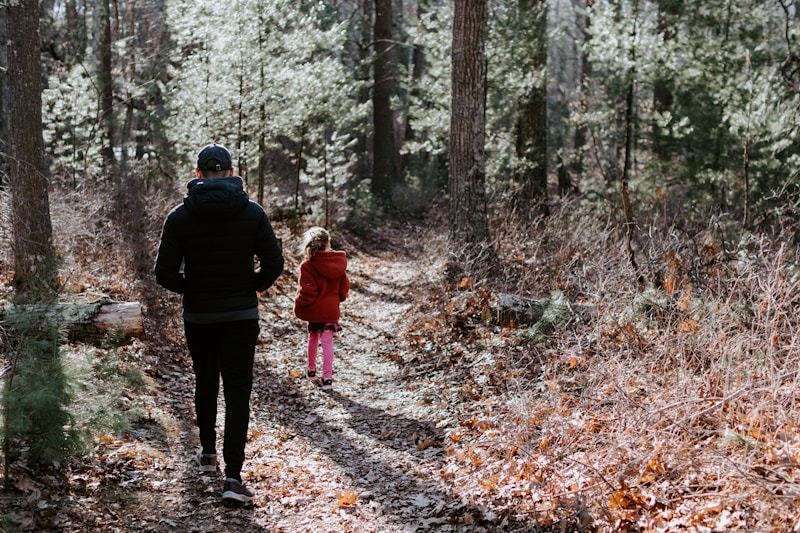
You finish your workday, close the laptop, and the first thing you reach for is your phone. Another hour of scrolling passes before you realize the sun has already set and the only fresh air you have breathed all day came from the thirty-second walk between your car and the office door. This is not a unique story. It is the story of modern life — a life where screens have replaced skylines, where climate-controlled rooms have replaced spring breezes, and where the idea of walking outdoors for no reason other than to walk has started to feel almost absurd. We are more connected digitally than ever before. And yet we have never been more disconnected from the natural world that our bodies and minds were built to inhabit. The good news is that the solution does not require a radical lifestyle overhaul, an expensive gym membership, or a retreat to a remote mountain cabin. It requires something far simpler: a pair of comfortable shoes and the willingness to step outside. Walking in nature, breathing fresh air, and allowing yourself to be present in an outdoor environment is among the most accessible and underrated wellness practices available. This article explores why walking in nature matters so deeply, what research tells us about its effects on mind and body, and how to build a lasting outdoor walking practice that fits into real life — not a fantasy version of it. The average adult in an urban environment now spends over ninety percent of their time indoors — inside homes, offices, vehicles, and commercial buildings. This is not a rough estimate. It is a finding that has been replicated across multiple studies in multiple countries, and the number has only crept upward with the rise of remote work, streaming entertainment, and delivery services that mean you can go days without stepping outside your front door. The forces driving this indoor shift are not malicious. They are convenience, comfort, and the genuine demands of modern productivity. But the cumulative effect is profound. Human beings evolved in outdoor environments. Our senses — sight, smell, hearing, even the sense of spatial awareness — developed in relationship to natural landscapes, changing weather, and the rhythms of daylight. When those inputs disappear from daily experience, something essential goes quiet. It is not dramatic. It does not announce itself with a symptom or a diagnosis. It simply accumulates: a background hum of restlessness, a subtle fogginess, a sense that something is missing that you cannot quite name. Recognising this disconnect is the first step. The next is understanding that the fix is not complicated. It is walking. Walking is what the human body is designed to do. It is the original mode of human transportation, the activity that shaped our physiology over millions of years. And when walking happens outdoors — in a park, along a tree-lined street, on a nature trail — it activates something that indoor exercise simply does not reach. The cost of indoor living is not just physical. Yes, sedentary behaviour is associated with a range of health concerns, and the link between prolonged sitting and reduced cardiovascular fitness is well established. But the deeper cost is harder to measure and easier to ignore. It lives in the space between feeling fine and feeling fully alive. Research in environmental psychology has documented a phenomenon sometimes referred to as nature deficit — the cumulative psychological and physiological effects of reduced contact with natural environments. People who spend less time in green spaces consistently report higher levels of perceived stress, lower baseline mood, and a diminished sense of connection to the world around them. These are not clinical conditions. They are quality-of-life indicators. And they respond remarkably well to even modest increases in outdoor time. There is also a social dimension to this loss. When outdoor spaces go unused, communities become less visible to each other. The casual encounters that happen on a walking path — the nod to a neighbour, the shared smile at a passing dog, the brief conversation about the weather — are small but cumulative threads in the fabric of belonging. When those threads disappear, the fabric thins. Walking outdoors is not only a personal wellness practice. It is a practice of showing up in shared space, and that act has value beyond any individual health metric. Walking is so ordinary that it is easy to overlook its power. Unlike running, which requires a certain baseline of fitness and motivation, or gym workouts, which demand equipment and planning, walking is accessible to nearly everyone regardless of age, fitness level, or location. It requires no training, no membership, and no special clothing beyond what keeps you comfortable in the current weather. And yet, when done consistently and outdoors, it delivers benefits that rival far more intense forms of exercise. Part of what makes walking uniquely effective is its low barrier to entry. You do not need to psych yourself up to go for a walk the way you might for a high-intensity interval session. You do not need to change clothes, drive somewhere, or block out a full hour. You simply open the door and start moving. That simplicity is not a weakness. It is the reason walking habits tend to stick when other exercise routines fall away. The best wellness practice is the one you actually do, and walking is the one you are most likely to keep doing. Walking outdoors adds another layer that treadmill walking cannot replicate: the sensory experience of being in a real environment. The quality of light changes as you move. The air carries scents — cut grass, damp earth, flowering trees. Sounds shift from traffic hum to birdsong to the rustle of leaves. These sensory inputs are not decorations. They are active ingredients. They engage parts of the brain that indoor environments leave dormant, and that engagement is part of why outdoor walking feels different from indoor walking — not just more pleasant, but more restorative. When you step outside and breathe deeply, you are doing more than filling your lungs with air that smells better than recycled office ventilation. You are exposing your body to an environment that supports multiple physiological systems in ways that indoor spaces cannot replicate. Outdoor air — particularly in green spaces, near trees, and away from heavy traffic — tends to have higher concentrations of negative air ions. These are molecules that carry an extra electrical charge and are produced in abundance by moving water, sunlight, and plant life. While negative ions are not a medical treatment, research has consistently observed associations between exposure to negative-ion-rich environments and improved mood, reduced perception of stress, and better subjective wellbeing. Forest environments, coastal areas, and even urban parks after rainfall are particularly rich in these ions. Sunlight exposure during outdoor walks triggers vitamin D synthesis in the skin, a process that indoor lighting cannot replicate. Vitamin D supports calcium absorption and bone health, but it also plays a role in immune function and mood regulation. A twenty-minute walk in midday sun — with arms and face exposed, depending on skin type and latitude — can meaningfully contribute to maintaining adequate vitamin D levels. This is not a prescription. It is context for understanding why outdoor movement matters in ways that go beyond step counts and calorie expenditure. Then there is the simple physics of walking itself. Walking is a weight-bearing activity that stimulates bone density maintenance, engages the cardiovascular system at a moderate and sustainable intensity, and promotes circulation throughout the body. Oxygen delivery to tissues improves. Lymphatic flow — which relies on muscle movement rather than a central pump — increases. These are baseline physiological processes, not extraordinary interventions. But when they are absent for days and weeks at a time, the body notices. Regular outdoor walking restores what modern sedentary life interrupts. Perhaps the most immediately noticeable benefit of walking outdoors is what happens to your mind. Within minutes of starting a walk — particularly in a natural setting — mental chatter tends to quiet. Thoughts that felt urgent and looping at your desk begin to loosen. The quality of your attention shifts from narrow and reactive to broad and receptive. This is not mysticism. It is a documented cognitive phenomenon. Researchers studying attention restoration theory have found that natural environments engage what is called soft fascination — a state of gentle, effortless attention that allows the brain's directed-attention systems to rest and recover. Unlike urban environments, which demand constant vigilance (traffic, signs, notifications, other people), natural settings provide enough interest to hold attention without demanding it. The result is a measurable improvement in cognitive performance after time spent in nature, including better working memory, improved focus, and enhanced creative problem-solving. Walking specifically adds a rhythmic, bilateral movement pattern to this equation. The alternating left-right motion of walking has been shown in some research contexts to facilitate cross-hemispheric communication in the brain, which may support the kind of integrative thinking that produces insights andcreative breakthroughs. This may explain why so many people report having their best ideas while walking — and why thinkers from Aristotle to Steve Jobs made walking a central part of their creative practice. The walk does not create the idea. It creates the conditions under which the idea can emerge. Walking is often framed as a solitary practice — and it certainly can be, and the solitary walk has its own distinct value. But walking is also among the most natural forms of social connection available. Walking side by side with someone, rather than sitting across from them, changes the dynamic of conversation. There is no eye contact to maintain, no table between you, no pressure to fill silences. The shared forward momentum and the changing scenery create a rhythm that makes difficult conversations easier and easy conversations deeper. Families who walk together regularly report feeling more connected. Couples who walk together find that issues they have been avoiding surface more naturally when there is no agenda beyond putting one foot in front of the other. Friends who commit to a weekly walking date often discover that the walk itself becomes the highlight — not the coffee afterward, not the destination, but the simple act of moving through the world together. Walking creates a shared experience without demanding performance. It is connection without pressure. From a broader perspective, walking outdoors contributes to community health in ways that are easy to overlook. Public green spaces that are actively used become safer and more vibrant. They signal that the neighbourhood is alive, that people care, that this is a place worth being. Every person who chooses to walk in a local park instead of staying indoors is making a small deposit into the social capital of their community. The return on that deposit is not immediate or measurable in numbers, but it is real. The Japanese practice of shinrin-yoku, or forest bathing, has attracted significant international attention in recent years — and for good reason. Studies on forest bathing have documented measurable physiological changes after time spent walking slowly through forest environments, including reduced cortisol levels, lowered blood pressure, and improved heart rate variability. These findings have been consistent enough across multiple research groups that forest bathing is now integrated into preventive healthcare recommendations in Japan and South Korea. But here is the important point that often gets lost in the enthusiasm for forest bathing: you do not need an ancient forest to benefit from outdoor walking. Urban parks, tree-lined streets, community gardens, riverside paths, and even a quiet residential neighbourhood with mature trees all provide meaningful exposure to natural elements. A study published in 2019 in the International Journal of Environmental Health Research found that as little as twenty minutes spent in an urban park — sitting or walking — produced significant reductions in salivary cortisol, a biomarker of stress. The effect was not limited to pristine wilderness. It happened in everyday green spaces that millions of people can access within a short walk of their homes. What matters is not the perfection of the environment but the consistency of exposure. A fifteen-minute walk through a local park five days a week delivers more cumulative benefit than a three-hour hike once a month. The dose makes the difference, and the dose is measured in frequency, not intensity. This is genuinely encouraging news for anyone who lives in a city, works long hours, or otherwise cannot regularly access deep wilderness. The nature that is nearby is enough. You just have to use it. Knowing that walking is good for you is not the same as doing it. The gap between knowledge and action is where most wellness intentions dissolve. Bridging that gap requires not more motivation but a better approach — one that works with human psychology rather than against it. The single most effective strategy is to reduce the friction between intention and action. Keep a pair of walking shoes by the door. Decide on a route in advance so there is no moment of indecision when you step outside. Attach the walk to an existing habit — after lunch, after the morning coffee, after dropping the children at school. When a new behaviour is anchored to something you already do automatically, it requires far less willpower to sustain. Start small enough that the commitment feels almost trivial. Ten minutes. Around the block. To the end of the street and back. The goal in the first two weeks is not fitness. It is identity. You are not training for a walking event. You are becoming someone who walks. Once that identity takes root — once "going for a walk" feels as natural as checking your phone — the duration and distance can expand naturally. But if you start with forty-five-minute daily walks in week one, you will almost certainly stop in week three. Build the habit first. Let the fitness follow. Vary your routes. Walking the same loop every day eventually becomes boring, and boredom is the silent killer of habits. Explore different parks, different neighbourhoods, different times of day. Notice how the same street looks different in morning light versus evening light, in spring versus autumn. Treat the walk as an exploration, not a commute. The novelty keeps the brain engaged and the practice fresh. Finally, consider inviting someone to join you. Accountability to another person is one of the most reliable predictors of habit adherence. A standing Wednesday evening walk with a friend, a Sunday morning family walk, a walking group at work — these social commitments transform walking from something you should do into something you have promised to do. And keeping promises to other people is easier than keeping promises to yourself. As your walking practice deepens — as the ten-minute loops become thirty-minute explorations and the flat paths give way to gentle hills — you may notice that your body needs more recovery than it once did. This is normal. It is a sign that you are asking more of your muscles, your cardiovascular system, and the connective tissues that support every step. Recovery is not a sign of weakness. It is the process through which activity produces adaptation rather than depletion. This is where a mild hyperbaric oxygen chamber becomes a valuable partner in your wellness routine. By creating a pressurised environment at 1.1 to 1.3 atmospheres with increased oxygen availability, the chamber supports the body's natural tissue repair and energy restoration processes. After a long walk — particularly one that involved hills, uneven terrain, or warm weather — a session in the chamber can help your body return to baseline more efficiently, so that tomorrow's walk feels like an opportunity rather than an obligation. The chamber is not a replacement for walking. It is a complement. Walking provides the movement, the fresh air, the sensory richness, and the connection to the outdoors. The mild hyperbaric chamber provides a recovery environment that supports circulation, oxygen delivery, and the natural repair processes your body initiates after physical activity. Together, they form a rhythm: move outdoors, recover intentionally, move again. It is a cycle that respects both the effort and the restoration that effort requires. Visit the Bio-Healthy product page to learn more about how a mild hyperbaric oxygen chamber fits into an active, outdoor-oriented lifestyle. There is no wellness practice more fundamental than walking outdoors. It requires no equipment, no membership, no training, and no special talent. It meets you exactly where you are — whether that is a five-minute shuffle around the block or a two-hour ramble through forest trails. It works with your body's natural design rather than against it. It restores what modern life systematically depletes: exposure to natural light, contact with fresh air, engagement of the senses, and the quiet satisfaction of moving through the world at a human pace. The invitation is not to transform your life overnight. It is to take one walk. Today, if possible. Around the block. Through the park. Along whatever stretch of green exists near where you live. Pay attention to what you notice — the quality of the light, the scent in the air, the feeling of your feet connecting with the ground. Do not track it, do not optimise it, do not turn it into a workout. Just walk. Breathe. Be outside. That single walk will not change your life. But a hundred walks will. A thousand walks will reshape not only your body but your relationship with the world around you. You will know your neighbourhood in a way that driving through it never reveals. You will notice the seasons turning. You will feel more connected — to your community, to nature, to yourself. Walking is slow medicine in a fast world. The only requirement is that you show up. Read more wellness insights or reach out to us if you would like to explore how recovery tools can support your active lifestyle. Research suggests that even twenty minutes of walking in a natural environment can produce measurable reductions in stress markers. For cumulative benefits — improved mood, better sleep, enhanced cardiovascular fitness — aim for at least 150 minutes of moderate walking per week, which works out to roughly thirty minutes on five days. The key is consistency, not intensity. A daily fifteen-minute walk beats a weekly two-hour hike when it comes to building lasting wellbeing. Studies comparing urban park walks with forest walks have found that both environments produce positive effects, though the magnitude may differ. Urban parks consistently reduce stress markers and improve mood compared to staying indoors or walking in built-up commercial areas. While deep forest environments may offer additional benefits from higher concentrations of plant-derived compounds called phytoncides, the most important factor is simply getting outdoors into any green space. Do not let the absence of wilderness become an excuse to stay inside. The best time is the time you will actually do it. That said, morning walks offer the added benefit of early daylight exposure, which helps regulate circadian rhythms and can improve sleep quality at night. Lunchtime walks break up the sedentary workday and can boost afternoon focus. Evening walks help transition from work mode to rest mode. Each time of day has its own character and advantages. Experiment and find what fits your schedule and your energy patterns. A mild hyperbaric oxygen chamber creates a pressurised environment at 1.1 to 1.3 ATA with increased oxygen availability, which supports the body's natural tissue repair and circulation processes. For regular walkers — especially those walking longer distances, on uneven terrain, or in warm weather — recovery sessions in the chamber can help the body return to a rested state more efficiently. It is not a requirement for walking, but it is a valuable support tool for anyone who wants to sustain an active outdoor lifestyle with less residual fatigue between walks. Walking in nature is not a programme to complete or a goal to achieve. It is a practice to return to, again and again, across the weeks and months and seasons of a life. The forest does not care how fast you move. The park does not grade your performance. The trail simply waits, as it has always waited, for you to show up. Every walk you take — whether five minutes or five miles — is a small act of reconnection: to your body, to the living world around you, and to the version of yourself that exists beyond screens and schedules and the accumulated weight of indoor days. The air is waiting. The path is there. All that remains is to open the door and take the first step. Explore the Bio-Healthy product range to support your outdoor wellness journey with recovery tools designed for the long walk ahead.
The Disconnect: Why Modern Life Keeps Us Indoors
What We Lose When We Lose Touch With Nature
The Simple Answer: Walking as the Original Wellness Practice
Fresh Air and Your Body: What Actually Happens
The Mental Clarity That Comes With Every Step
Walking as a Social Connector: Strengthening Bonds Outdoors
From Forest Bathing to Park Strolls: Every Green Space Counts
How to Build a Walking Practice That Sticks
A Gentle Recovery Partner: Supporting Your Body After Outdoor Activity
Step Outside, Breathe Deeply, and Reconnect
Frequently Asked Questions About Walking and Outdoor Wellness
How much outdoor walking do I need to feel the benefits?
Does walking in a city park provide the same benefits as walking in a forest?
What is the best time of day for an outdoor walk?
How can a mild hyperbaric oxygen chamber support my walking routine?
A Final Word: Your Path Begins at the Front Door