




How to Integrate Biohacking Equipment into Your Wellness Center or Spa: A 2026 Service Design Guide
Quick Answer: How Do You Add Biohacking Equipment to a Wellness Center?
Integrating biohacking equipment into a wellness center or spa requires a structured approach across five dimensions: space planning (dedicated recovery zones of 10-15sqm per technology), service menu design (tiered from standalone sessions to full-circuit packages), staff training (1-2 days per technology with ongoing protocol updates), client flow engineering (pre-session readiness checks, post-session relaxation zones), and marketing positioning (results-driven language focused on energy, recovery, and performance — not wellness claims). The global wellness economy reached $6.8 trillion in 2024, with biohacking technologies like Intermittent Hypoxia-Hyperoxia Training (IHHT), red light therapy, and cold plunge leading adoption in forward-thinking facilities. PROGEN's IHHT 0934 is purpose-built for this integration — compact, automated, and designed for commercial daily use.
1. Why Biohacking Is the Defining Wellness Trend of 2026
The wellness industry has undergone a fundamental shift. Clients no longer visit spas just to relax — they come seeking measurable improvements in energy, sleep quality, recovery speed, and daily performance. According to the Global Wellness Institute, the global wellness economy reached $6.8 trillion in 2024, with wellness tourism and spa services accounting for over $157 billion of that total.
Biohacking — the practice of using targeted technologies and protocols to optimize physical and cognitive function — sits at the center of this transformation. What was once a fringe interest of Silicon Valley executives and elite athletes has become a mainstream consumer expectation. A 2025 CDC survey found that roughly 1 in 3 U.S. adults now use a wearable device to track wellness metrics, creating a client base that expects data-driven, results-oriented services.
For wellness center and spa operators, this means one thing: the facilities that integrate biohacking technologies now will capture the most valuable segment of the market — clients who book frequently, spend more per visit, and refer others. The window for early-adopter advantage is open, but it will not stay open indefinitely as the category matures.
Strategic Positioning: The most successful biohacking integrations in 2026 position technology services as "protocols" rather than "treatments." This means structured, repeatable sessions with defined goals — improving daily energy, enhancing post-exercise recovery, supporting metabolic conditioning — rather than vague relaxation promises. The PROGEN IHHT 0934 fits this model perfectly: each 30-50 minute session follows a precise oxygen-cycling protocol backed by Nobel Prize-winning science.
2. Space Planning: Designing the Biohacking Zone
The physical layout of your biohacking area directly impacts client experience and operational efficiency. Unlike traditional spa treatment rooms that prioritize privacy and isolation, biohacking zones work best as semi-open, flowing spaces organized into distinct stations.
- Modular stations — Each technology (IHHT, red light, cold plunge, compression) gets its own defined zone of 10-15 square meters. This allows multiple simultaneous sessions without crowding or noise interference.
- Flow path design — Clients should move naturally from lighter interventions (red light, IHHT warm-up) to more intense ones (cold plunge, compression) in a logical sequence. Position stations in order of recommended circuit flow.
- Acoustic zoning — IHHT and relaxation-focused technologies should occupy the quieter side of the space. More active modalities (cold plunge, compression) can be placed where brief conversation and movement are expected.
- Infrastructure basics — Most biohacking devices run on standard wall power (110V or 220V). IHHT devices like the PROGEN 0934 require no special ventilation, plumbing, or structural modifications — just a quiet, well-ventilated room.
- Transition zones — Include a small lounge area with water, light reading, and comfortable seating where clients can rest between stations or after completing their circuit.
Common Space Planning Mistake: Trying to squeeze too many technologies into too little space. Each station needs breathing room — not just for equipment, but for the client's psychological comfort. A cramped biohacking zone undermines the premium experience you are trying to create. Start with 2-3 core technologies in a generous layout, then expand as demand grows.
3. Service Menu Design: From Standalone Sessions to Full Circuits
How you package and present biohacking services determines both client uptake and revenue per visit. The most effective approach uses a tiered menu that gives clients clear entry points and natural upgrade paths:
| Tier | Format | Example Offering | Client Profile |
|---|---|---|---|
| Intro | Single standalone session | IHHT cellular conditioning — 40 min | First-time clients, curious visitors |
| Core | Technology-specific package | IHHT 10-session pack (2-3x/week) | Regular clients seeking consistent results |
| Circuit | Multi-technology flow | Recovery Circuit: IHHT + Red Light + Compression | Performance-focused clients, athletes |
| Membership | Unlimited access model | Monthly biohacking membership | High-frequency clients, wellness enthusiasts |
The membership model deserves special attention. According to Global Wellness Institute data, membership-based wellness facilities see 3-5x higher visit frequency compared to pay-per-visit models. For IHHT, the standard protocol of 2-3 sessions per week over 4-8 weeks naturally supports a package-based sales model.
4. Staff Training: Building a Biohacking-Ready Team
- Technology-specific training — 1-2 days per device type. Staff need to understand basic operating principles, session setup, safety monitoring, and common troubleshooting. For IHHT, this includes mask fitting, SpO2 monitoring interpretation, and protocol selection.
- Client communication framework — How to explain each technology in simple, confident terms. Scripts for the most common client questions.
- Protocol documentation — Standardized session records for each technology and each client. Digital tracking enables staff to review progress and adjust protocols over time.
- Ongoing education — Monthly 30-minute team sessions to review new research, share client success stories, and refine protocols.
PROGEN supports facility partners with IHHT training resources, including detailed operating manuals, protocol guidelines, and remote consultation with our 30-plus scientist R&D team.
5. Client Experience Design: The First-Visit Flow
- Pre-arrival (5 minutes) — Client receives a brief digital orientation explaining what to expect and how to prepare.
- Arrival and readiness check (5 minutes) — Staff review a simple pre-participation form, answer questions, and set expectations for the session. This is not a medical assessment — it is a comfort and readiness conversation.
- Technology introduction (3 minutes) — Staff explain the specific device the client will use: how the mask fits, what the oxygen cycling feels like, that they can rest or even sleep during the session.
- Session delivery (30-50 minutes for IHHT) — Client reclines, breathes through the mask, and relaxes. Staff check in once mid-session to confirm comfort.
- Post-session debrief (5 minutes) — Staff ask how the client feels, note any observations, and recommend next steps.
6. Integrating IHHT with Other Biohacking Modalities
| Combination | Session Flow | Total Time | Positioning |
|---|---|---|---|
| IHHT + Red Light | IHHT (30 min) then Red Light (15 min) | 45 min | Cellular Energy Circuit |
| IHHT + Compression | Compression (20 min) then IHHT (30 min) | 50 min | Recovery Stack |
| IHHT + Cold Plunge | IHHT (30 min) then Cold Plunge (3-5 min) | 35 min | Contrast Conditioning |
| Full Circuit | Red Light (10) then IHHT (30) then Compression (15) then Cold Plunge (3) | 60 min | Complete Biohacking Circuit |
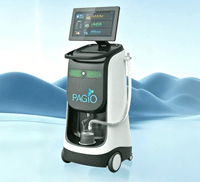
The IHHT 0934's compact design and quiet operation make it straightforward to position alongside other equipment. PROGEN also manufactures complementary technologies — explore our full cell regeneration equipment line to build a cohesive technology stack from a single supplier.
7. Marketing Positioning: How to Talk About Biohacking Without Overpromising
- Describe the experience, not the outcome. "A 40-minute cellular conditioning session that alternates low and high oxygen while you rest" is more credible than "anti-aging oxygen treatment."
- Use client language, not scientist language. "You'll feel clearer and more energized" resonates more than "improved mitochondrial oxidative phosphorylation efficiency."
- Lead with the protocol, not the device. "Our Cellular Conditioning Program" sounds like a curated service. "We have an IHHT machine" sounds like a gym. Clients buy programs, not equipment.
For IHHT, the most effective marketing angles in 2026 are: daily energy support, post-exercise recovery, metabolic conditioning, and cognitive clarity.
Frequently Asked Questions
How many biohacking technologies should a wellness center start with?
Start with 2-3 core technologies that cover different wellness dimensions. A strong starter stack: IHHT (cellular conditioning), red light therapy (skin and recovery), and cold plunge or compression (circulation and recovery). This trio covers the most in-demand biohacking modalities while keeping staff training and space requirements manageable.
Do I need separate rooms for each biohacking device?
Not necessarily. IHHT devices like the PROGEN 0934 operate at under 48dB — quieter than a library — so multiple units can run in a shared space with light partitions for visual privacy. The key is to create a flowing, spa-like atmosphere rather than a clinical room layout.
What is the typical client profile for biohacking services?
The biohacking client base is broader than many operators expect. Core demographics include: active professionals (30-55) seeking energy and cognitive support, fitness enthusiasts focused on recovery, wellness-invested clients interested in healthy aging, and a growing segment of younger clients (25-35) who view biohacking as a lifestyle choice.
How long does it take to see client demand for biohacking services?
Most facilities report initial traction within 4-8 weeks of launch, driven by existing client curiosity and local wellness community interest. Steady-state utilization — 50-70% of daily capacity — typically develops within 3-6 months as word-of-mouth referrals compound. The key accelerators are a well-executed launch campaign and a compelling introductory offer for first-time clients.
Ready to Build Your Biohacking Wellness Program?
The global wellness economy is $6.8 trillion and growing. Early adopters who integrate biohacking technologies now are capturing premium positioning in their local markets. PROGEN's Intermittent Hypoxia-Hyperoxia Training System (IHHT 0934) is built for this moment — compact, automated, CE certified, and backed by Nobel Prize-winning science.
Contact PROGEN — Plan Your Biohacking IntegrationWe will respond within 24 hours with facility-specific integration guidance and product specifications.
Sources: Global Wellness Institute — The Global Wellness Economy Report (2024); CDC/NCHS — Wearable Device Adoption Survey (2025); Spa Team International — Biohacking Goes Boutique Report (2026); ReparoSpace — Fast-Growing Wellness Industries Report (2026); PROGEN IHHT 0934 Product Documentation. PROGEN — One-stop Bio-Innovation Solutions for Beauty and Health.