












Breathing Techniques for Sharper Thinking: Simple Rhythms That Clear Your Mind
When Your Brain Refuses to Cooperate
You know the feeling. You sit down at your desk with a clear to-do list and a full cup of coffee. The deadline is reasonable. The task is familiar. By every logical measure, you should be able to lock in and get it done. But ten minutes pass and you have checked your phone twice, reread the same email three times, and somehow opened a browser tab you do not remember clicking. Your mind feels like a radio tuned between stations — there is something there, but it is buried under static, and no amount of willpower seems to clear the signal.
This experience is not a character flaw. It is not laziness, and it is not a sign that you are losing your edge. It is what happens when the brain's attention systems are running on low fuel, and the most common culprit is something so automatic that most people never think to look at it: the way you breathe.
Breathing is the only autonomic function you can consciously control. Your heart beats on its own. Your digestion runs in the background. But your breath sits right at the intersection of automatic and intentional — and that makes it one of the most powerful levers you have for shifting how your mind feels and performs in real time. The question is not whether breathing affects thinking. The research is clear on that. The question is whether you are using yours in a way that helps or hinders the clarity you are after.

The Quiet Frustration Nobody Talks About
There is a particular kind of frustration that comes with mental fog. It is not loud or dramatic. It does not announce itself like a headache or a wave of exhaustion. It is quieter than that — a soft, persistent sense that your thinking has slowed down, that ideas are harder to reach, that the sharpness you used to rely on has gone slightly out of focus and you cannot figure out why.
What makes this kind of mental drift so disorienting is that everything else seems fine. You slept enough. You ate breakfast. You are not sick. And yet the words on the screen blur, the conversation in the meeting slips past you, and the creative spark that usually lights up halfway through the morning stays stubbornly dark. You start to wonder if this is just how it is going to be now — if the clear, agile mind you remember is something that belonged to a younger, less burdened version of yourself.
Modern life does not make it easy. Notifications arrive in a steady stream. Screens demand attention from every angle. Indoor air is often stale and recycled. Posture collapses forward over keyboards and phones, compressing the diaphragm and turning breathing into something shallow and rushed. Most people take between twelve and twenty breaths per minute without ever filling the lower lungs. Day after day, week after week, the brain operates on the respiratory equivalent of sipping air through a straw — and then everyone wonders why thinking feels so hard.
The cost is not just one slow afternoon. It is the accumulation of half-finished thoughts, the meetings you nodded through without really hearing, the ideas that never quite made it from your head to the page. It is the slow erosion of confidence that comes from feeling like you are working harder than ever but producing less than you used to. And the most frustrating part? The solution has been right under your nose the whole time — literally.
Your Breath Is the Simplest Tool You Have Been Ignoring
Here is something remarkable: you do not need a special device, an expensive app, a silent retreat, or a radical lifestyle overhaul to sharpen your thinking. The tool is already built into your body, and it has been there since your first moment outside the womb. Your breath.
What makes breathing uniquely powerful is that it bridges two worlds at once. It happens automatically, keeping you alive without any conscious effort. But the moment you choose to pay attention to it — to slow it down, deepen it, or shift its rhythm — you are sending a direct signal to your nervous system that changes how your brain operates. No other bodily function gives you that kind of access. You cannot decide to lower your heart rate by force of will, but you can decide to take slower breaths, and your heart rate will follow. You cannot command your stress hormones to drop, but you can exhale slowly and fully, and they will.
This is not wellness rhetoric. It is neurobiology. Researchers have identified a direct neural pathway connecting the breathing control center in the brainstem to the brain's arousal and attention systems. Every inhale slightly excites your neurons. Every exhale calms them. When you breathe in a slow, steady rhythm — around six breaths per minute instead of the typical twelve to twenty — you are essentially giving your brain a metronome to organize itself around. Focus improves. Mental noise quiets. The static between stations begins to clear.
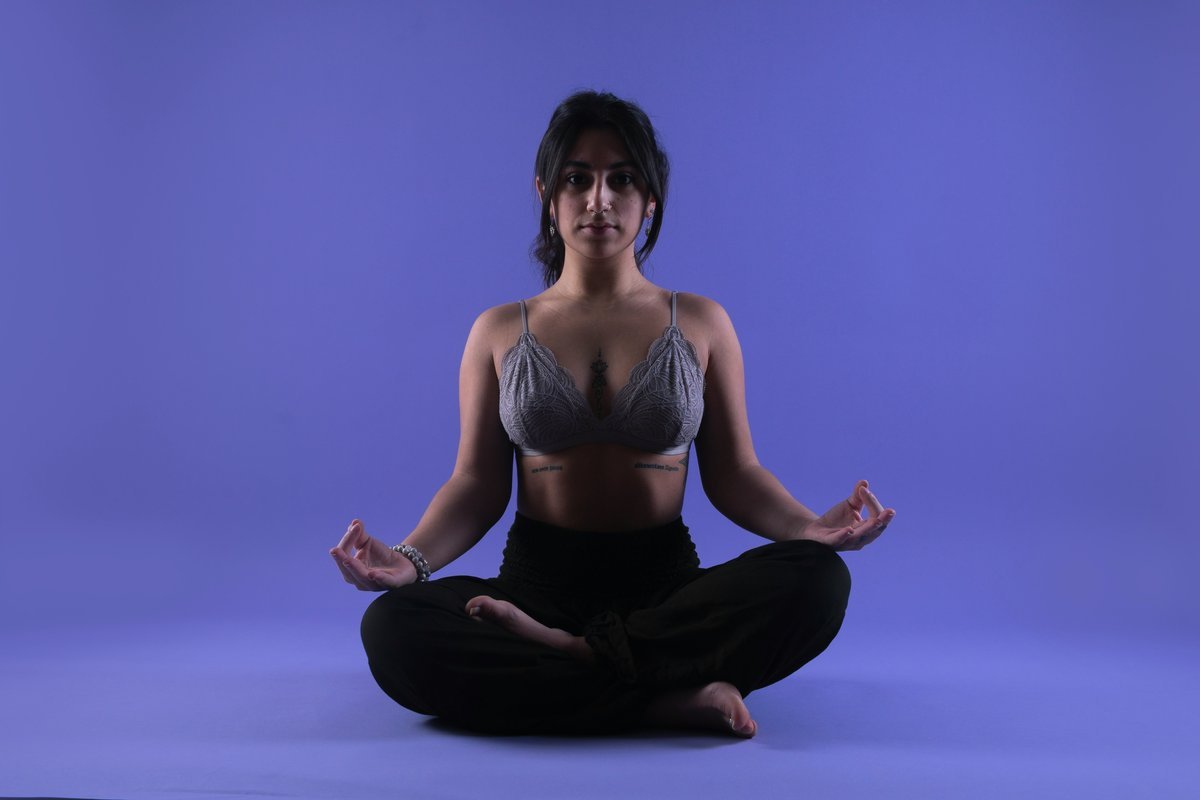
How Rhythmic Breathing Changes the Way Your Brain Works
The science behind breathing and cognition has advanced dramatically in recent years, and the findings point in one consistent direction: how you breathe directly shapes how you think. A 2025 study published in Scientific Reports found that just four weeks of mindfulness breathing meditation significantly improved cognitive flexibility — the brain's ability to shift between tasks and adapt to new information — while simultaneously reducing perceived stress levels. The participants did not change their diets, their exercise routines, or their sleep schedules. They simply practiced breathing differently for a few minutes each day.
What is happening inside the brain during these moments of slow, intentional breathing? Several things at once. First, deep diaphragmatic breathing stimulates the vagus nerve, the longest cranial nerve in the body, which runs from the brainstem down through the neck and into the chest and abdomen. When this nerve is activated, it triggers the parasympathetic nervous system — the body's "rest and digest" mode — which counteracts the fight-or-flight response that keeps the mind jittery and scattered. Heart rate drops. Blood pressure steadies. The brain gets the signal that it is safe to focus.
Second, slow breathing increases heart rate variability, or HRV — the subtle variation in time between heartbeats. Higher HRV is associated with better emotional regulation, stronger attention control, and greater cognitive resilience under pressure. Multiple studies have shown that paced breathing at around six breaths per minute maximizes HRV, putting the nervous system into a state that researchers describe as "highly coherent" — balanced, responsive, and primed for clear thinking.
Third, there is the oxygen story. The brain, despite weighing only about two percent of body mass, consumes roughly twenty percent of the oxygen you take in at rest. When breathing is shallow and rapid, oxygen exchange is less efficient. More of each breath stays in the upper airways, never reaching the deep alveoli where gas exchange actually happens. Slow, deep, nasal breathing fills the lungs more completely, increasing the amount of oxygen that makes it into the bloodstream and, from there, into the neurons that power every thought you have.
None of this requires belief or special talent. It is physiology. And it works the same way whether you are a seasoned meditator or someone who has never thought about their breath for a single second of their adult life.
A Quick Note on What This Article Is — and Is Not
This article describes breathing techniques that many people find supportive for focus, calm, and mental clarity. It draws on published research, established wellness practices, and real-world experience. It does not offer medical advice, diagnose any condition, or suggest that breathing exercises replace professional healthcare. If you have respiratory concerns, cardiovascular issues, or any health condition, speak with a qualified professional before beginning a new breathing practice. The techniques described here are gentle, accessible, and designed for generally healthy adults looking to support their everyday cognitive performance.
Box Breathing: Four Counts to a Calmer, Sharper Mind
If you were to learn only one breathing technique for mental clarity, box breathing would be a strong candidate. It is simple enough to remember under pressure, structured enough to anchor a scattered mind, and backed by real-world use in some of the most demanding environments on the planet — including Navy SEAL training, where it is taught as a tool for maintaining calm and focus in high-stakes situations.
The technique is called "box" or "square" breathing because each phase lasts exactly the same amount of time, creating a balanced four-part rhythm that feels steady and predictable. Here is how it works:
Repeat this cycle four to six times — which takes only about two minutes — and notice how your mind feels afterward. Most people report a sense of quiet alertness: not sleepy, not amped up, but grounded and present. That is the sweet spot for focused work, and it is available to you anytime you have two minutes and a place to sit.
Box breathing works partly because of its symmetry. The equal timing across all four phases gives the brain a predictable pattern to follow, which helps interrupt the mental chatter that often accompanies stress and distraction. The counting itself — four in, four hold, four out, four hold — gives the analytical part of your mind something simple to do, leaving less bandwidth for anxious loops and scattered thoughts. It is a cognitive anchor disguised as a breathing exercise.
The 4-7-8 Pattern: A Gentle Reset When Your Mind Feels Foggy
If box breathing is the daily driver for sharp focus, the 4-7-8 technique is the reset button for when the fog has already rolled in. Developed by Dr. Andrew Weil and rooted in ancient pranayama practice, this pattern uses an extended exhale to activate the parasympathetic nervous system more deeply than equal-ratio breathing can manage on its own.
The mechanics are straightforward: inhale through your nose for a count of four, hold your breath for a count of seven, and exhale completely through your mouth for a count of eight — ideally making a soft whooshing sound as the air leaves. The key is the seven-second hold, which allows carbon dioxide to accumulate slightly in the blood, producing a natural calming effect, and the eight-second exhale, which gives the vagus nerve a long, steady activation signal. Four cycles take less than two minutes.
Many people find the 4-7-8 pattern especially useful during the mid-afternoon slump — that stretch between about two and four in the afternoon when focus collapses, eyelids grow heavy, and even simple decisions feel draining. Instead of reaching for another cup of coffee, which can push the nervous system further into a stressed, over-caffeinated state, the 4-7-8 technique offers a way to reset without stimulants. The effect is often described as similar to taking a short power nap, but without the grogginess that sometimes follows actual sleep.
One practical tip: the seven-second hold can feel long when you first try it. If it causes any discomfort, shorten the hold to four or five seconds and build up gradually. The technique should never feel like a struggle. The goal is gentle regulation, not respiratory endurance training. As with any breathing practice, stop if you feel lightheaded and return to your natural breathing pattern.

Alternate Nostril Breathing: A Time-Tested Way to Balance Focus and Energy
Alternate nostril breathing, known in yoga as Nadi Shodhana, has been practiced for thousands of years — and modern research is beginning to catch up with what practitioners have long reported: it helps balance the nervous system, calm a racing mind, and restore a sense of equilibrium that makes focused thinking feel effortless rather than forced.
The technique involves breathing through one nostril at a time in a controlled, alternating pattern. Here is how to do it: sit comfortably with your spine reasonably straight. Bring your right hand to your nose. Close your right nostril with your right thumb and inhale slowly through your left nostril for a count of four. At the top of the inhale, close your left nostril with your right ring finger, release your thumb from the right nostril, and exhale slowly through the right nostril for a count of six. Then inhale through the right nostril for four, close it, release the left, and exhale through the left for six. That is one complete cycle. Repeat for five to ten cycles, keeping the breath smooth and unforced.
What makes this technique particularly interesting from a cognitive perspective is its effect on the autonomic nervous system. The left and right nostrils are each connected to different branches of the autonomic network, and research suggests that alternating between them may help bring the sympathetic and parasympathetic systems into better balance. Anecdotally, many people report feeling clearer, calmer, and more mentally organized after just a few minutes of alternate nostril breathing — as if the two halves of the brain have synced up and stopped pulling in opposite directions.
This is a good technique to reach for when you feel mentally scattered in a way that is not quite stress and not quite fatigue — more like internal static, a sense that your thoughts are jumping around without settling anywhere useful. Alternate nostril breathing provides a structured, rhythmic focus point that gently corrals the mind without demanding that it be quiet. The counting, the switching, the physical sensation of air moving through each nostril — all of it gives the restless parts of your brain something to do while the deeper systems settle.
Diaphragmatic Breathing: The Foundation That Makes Every Technique Work Better
Before any specific breathing pattern can do its best work, there is a more basic skill worth developing: breathing into your belly instead of your chest. Diaphragmatic breathing, sometimes called belly breathing or deep breathing, is not a technique so much as a return to the way humans are designed to breathe before modern posture, stress, and sedentary habits train it out of us.
The diaphragm is a large dome-shaped muscle that sits under the lungs, separating the chest cavity from the abdominal cavity. When you inhale deeply, the diaphragm contracts and flattens downward, creating space for the lungs to expand fully. When you exhale, it relaxes and rises back up, helping push air out. This is efficient, low-effort breathing — the kind that fills the lungs from the bottom up and maximizes oxygen exchange with every breath.
Most adults, however, breathe primarily into the upper chest. The diaphragm barely moves. The accessory muscles in the neck and shoulders do the work instead, and they tire quickly. The result is fast, shallow breathing that delivers less oxygen per breath, keeps the sympathetic nervous system slightly activated, and contributes to the low-grade tension that builds up in the neck and shoulders over the course of a workday. It is the respiratory equivalent of typing with two fingers: it gets the job done, but it is inefficient and exhausting.
Learning to breathe diaphragmatically is straightforward. Lie on your back with one hand on your belly and one on your chest. Breathe slowly through your nose, aiming to make the hand on your belly rise while the hand on your chest stays relatively still. Exhale and feel the belly fall. Practice this for two or three minutes a day — in bed before sleep is an easy time to remember — and within a week or two, the pattern will start to carry over into your waking hours without conscious effort. Once diaphragmatic breathing becomes your default, every other technique on this page becomes more effective. It is the foundation the whole house is built on.

Five Minutes That Can Reshape Your Entire Workday
The promise of breathing techniques can sound too modest to take seriously. Five minutes? Twice a day? How could something that simple make a real difference when the demands on your attention feel so overwhelming? The answer is that it does not need to fix everything at once. It just needs to shift the baseline.
Think of your attention like a thermostat. When the room is too hot or too cold, the thermostat does not instantly change the temperature of every molecule of air. It sends a small signal that triggers a larger system, and over time the whole room adjusts. Breathing techniques work the same way. A few minutes of slow, intentional breathing sends a small signal to your nervous system — and your nervous system, in turn, adjusts the larger systems that govern focus, stress, and mental energy.
Here is a practical five-minute routine you can try today, using only the techniques already described:
Do this once in the morning before you start work, and once in the early afternoon when focus typically begins to fray. That is ten minutes total across the whole day. The effects are not dramatic in the way a double espresso is dramatic. They are subtler and, over time, more sustainable: a slightly steadier mind, a slightly longer attention span, a slightly easier return to focus after interruptions. Those small shifts, compounded across weeks and months, are what genuine cognitive improvement looks like.
Troubleshooting: What to Do When Breathing Exercises Feel Uncomfortable
For something that is supposed to be natural, intentional breathing can feel surprisingly awkward at first. If your early attempts leave you feeling lightheaded, anxious, or frustrated rather than calm, you are not doing it wrong — you are experiencing a perfectly normal adjustment period. Here are the most common challenges and how to work through them.
Lightheadedness. This is the most common complaint, especially with techniques that involve breath holds like box breathing or 4-7-8. It usually means you are either breathing too forcefully or holding with too much tension. The fix is simple: slow down, soften the breath, and shorten the holds. Try three-count holds instead of four, or skip the holds entirely for the first week. The goal is regulation, not respiratory gymnastics. Lightheadedness should pass within seconds of returning to normal breathing. If it persists, stop and try a gentler approach next time.
Feeling more anxious instead of less. This can happen when focused breathing makes you hyper-aware of physical sensations you normally ignore — a racing heart, tightness in the chest, a lump in the throat. Paradoxically, trying to relax can sometimes make tension feel worse. If this happens, switch to a technique that gives the mind less to do. Simply breathing diaphragmatically with no counting, no holds, and no nostril alternation is often the gentlest entry point. Let go of the expectation that you should feel instantly calm. The benefit builds over time, not in a single session.
Falling asleep. If every breathing session turns into an accidental nap, try sitting upright in a chair rather than lying down, keeping your eyes softly open with a relaxed gaze on a fixed point, and practicing earlier in the day rather than right before bed. The 4-7-8 technique in particular is deeply relaxing and better suited to evening wind-down than morning activation. Save it for after work and use box breathing or diaphragmatic breathing during the day.
Can not find the time. This is the most honest challenge, and the most important one to solve. The answer is not to find more time but to attach the practice to moments that already exist. Breathe for sixty seconds while your coffee brews. Do box breathing during the last two minutes of your lunch break. Practice diaphragmatic breathing while waiting for a file to download. Brief, scattered moments add up, and they remove the pressure of needing a "proper" session.

What to Expect After a Week of Daily Practice
One of the most useful things you can do when starting a breathing practice is to set realistic expectations. The internet is full of breathwork testimonials that describe instant transformations — and while those stories can be inspiring, they set a bar that makes ordinary, gradual progress feel like failure. Here is what most people actually notice after a week of consistent daily practice.
Days one to three tend to feel like very little is happening. The techniques may feel mechanical or awkward. Your mind will wander constantly. You might finish a session and wonder if you did it at all. This is normal. You are building a new neural pathway, and like any new skill — playing an instrument, learning a language — the early days are about repetition, not results. Keep going.
Days four to seven is when the first subtle shifts typically appear. You might notice that the mid-afternoon fog arrives a little later or feels a little thinner. You might catch yourself taking a deeper breath automatically during a stressful moment, without having planned to. You might realize at the end of a workday that you feel less drained than usual — not energetic, exactly, but not depleted either. These are small signals, easy to miss if you are not looking for them, but they are the first signs that your nervous system is learning a new default.
The most reliable early benefit is not a dramatic boost in productivity or creativity. It is an improved recovery time. After an interruption, a stressful email, or a moment of mental drift, you find your way back to focus a little faster than you used to. That may not sound like much, but over the course of a full workweek, faster recovery from distraction is one of the most practical cognitive upgrades available — and it compounds.
Building a Breath Practice That Actually Sticks
The biggest threat to any new habit is not lack of motivation. It is the gap between the person you are on a calm Sunday evening — the one who plans to meditate for ten minutes every morning, journal before bed, and drink exactly the right amount of water — and the person you are on a chaotic Wednesday afternoon when everything is on fire and you just need to survive until dinner.
Breathing practices survive that gap better than most habits because they are fast, portable, and require zero equipment. But they still need a simple structure to keep them from drifting out of your routine the moment life gets busy. Here is a framework that has worked for many people:
Anchor it to something that already happens.
Do not schedule "breathing time" as a standalone event. Attach it to an existing trigger: first sip of morning coffee, right after you sit down at your desk, the moment you close your laptop for lunch, the five minutes before you leave the office. The trigger does the remembering for you.
Keep the bar embarrassingly low.
One minute of diaphragmatic breathing counts. Two cycles of box breathing counts. The goal is consistency, not duration. A one-minute practice you do every day is worth infinitely more than a twenty-minute practice you do twice and abandon.
Track how you feel, not how well you performed.
After each session — or even just once a day — ask yourself a single question: how does my head feel right now? Sharp or fuzzy? Calm or scattered? Write down one word. Over weeks, the pattern will tell you more than any productivity metric could.
Rotate techniques to stay interested.
Box breathing for morning focus. 4-7-8 for the afternoon slump. Alternate nostril breathing when you feel scattered. Diaphragmatic breathing at night. Variety keeps the practice fresh and gives you tools matched to different mental states.
The people who stick with breathing practices long enough to see real cognitive benefits are not the ones with the most discipline. They are the ones who lowered the barrier to entry so far that not doing it felt like the harder choice. Your breath is always with you. The only thing that needs to change is whether you pay attention to it.
One Breath Is All It Takes to Begin
If you have read this far and feel slightly overwhelmed by the number of techniques and recommendations, here is the only thing you need to remember: the next breath you take can be slower than the last one. That is it. That is the entire practice in a single sentence.
You do not need to master box breathing. You do not need to commit to a daily routine. You do not need to understand the vagus nerve or heart rate variability or the name of every breathing pattern in the yoga tradition. All you need is the willingness to slow down one breath — right now, wherever you are — and notice what changes. Maybe nothing changes. That is fine. Try again with the next one.
The mind you want — the sharper, calmer, more focused version of yourself that sometimes feels unreachable — is not somewhere else. It is not in a future version of you who has figured everything out. It is here, now, waiting behind the noise of a day that moves too fast and a body that has forgotten how to slow down. Your breath is the door. All you have to do is walk through it, one inhale and one exhale at a time.
For more practical wellness insights and simple daily habits that support a clearer, calmer mind, you can read more from our wellness journal or explore our collection of everyday wellness tools designed to fit into a real, busy life.