Quick Answer: Altitude Training vs Hyperbaric Oxygen — What Is the Core Difference?
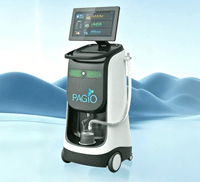
Altitude training (also known as simulated altitude training or IHHT — Intermittent Hypoxia-Hyperoxia Training) is an active cellular conditioning method: it alternates breathing low-oxygen and high-oxygen air at normal atmospheric pressure, triggering your body's own adaptive mechanisms through the HIF-1 alpha oxygen-sensing pathway (2019 Nobel Prize). A hyperbaric oxygen chamber is a passive oxygen delivery method: it increases atmospheric pressure while delivering concentrated oxygen, saturating blood plasma through Henry's Law of gas dissolution. In short — altitude training programs your cells to use oxygen more efficiently; hyperbaric chambers push more oxygen into your system. PROGEN manufactures both technologies, including the Intermittent Hypoxia-Hyperoxia Training System and mild hyperbaric chambers, enabling wellness facilities to build a complete oxygen-based service portfolio.
ActiveAltitude Training MechanismCellular adaptation via HIF-1 alpha
PassiveHyperbaric Chamber MechanismPlasma saturation via Henry's Law
30-50Min per Altitude Sessionvs 60-90 min hyperbaric
$120MGlobal IHHT Market (2025)Growing at 8.2% CAGR
1. Two Different Paths to Oxygen-Based Wellness
When wellness facility operators evaluate oxygen-based technologies, two names consistently appear: simulated altitude training systems and hyperbaric oxygen chambers. Both involve controlled oxygen environments. Both are increasingly adopted by high-end spas, sports centers, and longevity clinics. But they achieve their effects through fundamentally different biological pathways — and understanding this difference is essential to making the right choice for your facility.
The simplest way to think about it: altitude training challenges your cells to adapt; hyperbaric chambers flood your body with oxygen. One is a training stimulus. The other is a delivery mechanism. Neither is inherently better — they serve different purposes and, in many cases, work best together.
| Dimension | Altitude Training (IHHT) | Hyperbaric Oxygen Chamber |
|---|
| Core Mechanism | Active cellular conditioning — alternating low/high oxygen triggers adaptive response | Passive oxygen delivery — increased pressure dissolves more oxygen into blood plasma |
| Scientific Principle | HIF-1 alpha pathway (2019 Nobel Prize in Physiology or Medicine) | Henry's Law — gas dissolution increases with pressure |
| Oxygen Pattern | Alternating: low (9-16% O2) then high (30-40% O2) in cycles | Constant: elevated oxygen concentration throughout session |
| Atmospheric Pressure | Normal (normobaric) — no pressure change | Increased (hyperbaric) — typically 1.3 to 2.0 ATA |
| Session Duration | 30-50 minutes per session | 60-90 minutes per session |
| Equipment Type | Compact device with breathing mask — open system | Sealed chamber — user sits or lies inside |
| Physical Activity | None — passive, lying down or seated | None — sitting or lying inside chamber |
| Recommended Frequency | 2-3 sessions per week over 4-8 weeks | 3-7 sessions per week depending on goal |
| Equipment Footprint | Compact — approximately 37x36x40cm | Larger — chamber-sized unit, requires dedicated space |
2. How Altitude Training Works: The HIF-1 Alpha Pathway
The biological engine behind simulated altitude training is the hypoxia-inducible factor (HIF-1 alpha) pathway — the oxygen-sensing mechanism that earned William Kaelin, Sir Peter Ratcliffe, and Gregg Semenza the 2019 Nobel Prize in Physiology or Medicine.
Here is the sequence: during the low-oxygen (hypoxia) phase, oxygen availability in tissues temporarily drops. This signals cells to stabilize and accumulate HIF-1 alpha, a master regulatory protein. Once activated, HIF-1 alpha triggers several adaptive responses: new mitochondria production, improved oxygen transport efficiency, and enhanced cellular energy metabolism. Then, during the high-oxygen (hyperoxia) recovery phase, the body rapidly replenishes oxygen levels, creating a contrast effect that reinforces the adaptive signal.
Over 4-8 weeks of regular sessions (2-3 per week), this alternating pattern produces cumulative cellular adaptations that support better oxygen utilization, metabolic efficiency, and overall energy levels. The PROGEN Intermittent Hypoxia-Hyperoxia Training System (IHHT 0934) automates this entire process — users simply lie down and breathe through a comfortable mask while the device precisely alternates oxygen concentrations between 9% and 34% based on real-time biofeedback.
Key Distinction: Altitude training is normobaric — it changes only the oxygen concentration in the breathing air, not the atmospheric pressure. This eliminates the ear pressure discomfort and longer session times associated with pressurized chambers. It also means the device can be compact, quiet (under 48dB), and operate on standard wall power with no special infrastructure.
3. How Hyperbaric Chambers Work: Henry's Law
Hyperbaric oxygen chambers operate on a different principle entirely. Instead of varying oxygen levels, they increase atmospheric pressure (typically 1.3 to 2.0 ATA for wellness-grade units) while delivering concentrated oxygen. Under Henry's Law of physics, the amount of gas that dissolves in a liquid increases proportionally with pressure. In the human body, this means more oxygen dissolves directly into blood plasma — bypassing the normal hemoglobin transport system and reaching tissues even when circulation is restricted.
Hyperbaric chambers have been studied extensively over the past five decades and are widely used in both professional and home wellness settings. Sessions run 60-90 minutes. The user rests inside a sealed chamber — either a soft-shell portable unit or a hard-shell professional model — while pressure and oxygen levels are maintained at preset levels.
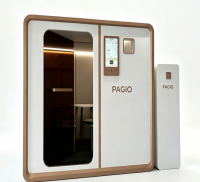
PROGEN offers mild hyperbaric chamber solutions alongside the IHHT altitude training system, enabling wellness facilities to offer both technologies from a single equipment partner. This dual-manufacturing capability simplifies procurement, after-sales service, and staff training coordination.
4. Side-by-Side: Experience, Operation, and Business Fit
Beyond the science, the day-to-day operational differences between these two technologies matter significantly for wellness businesses:
- Client experience — Altitude training sessions feel like a restful break: you lie down, breathe through a mask, and the device does the work. Some users read or even sleep. Hyperbaric sessions involve entering and remaining inside a sealed chamber, which some clients find calming and others find confining. The right choice depends on your clientele's preferences.
- Space requirements — An altitude training device occupies roughly the footprint of a small bedside table (37x36x40cm for the PROGEN IHHT 0934). A hyperbaric chamber requires dedicated floor space — typically 3-6 square meters for a single-person unit. Facilities with limited room often start with altitude training and add a hyperbaric chamber later as space allows.
- Staff requirements — A single technician can supervise multiple altitude training sessions simultaneously, since each device runs autonomously with automated safety monitoring. Hyperbaric chambers require more hands-on oversight — assisting clients in and out, managing pressure equalization, and monitoring chamber conditions.
- Session turnover — Shorter altitude training sessions (30-50 min) allow more client bookings per device per day compared to 60-90 minute hyperbaric sessions. Facilities optimizing for throughput often use altitude training as the primary volume driver.
- Complementary pairing — The two technologies are not competitors; they are complements. Many premium wellness facilities offer both: altitude training for cellular conditioning and metabolic support (2-3 sessions per week per client), and hyperbaric chambers for oxygen saturation and recovery (3-7 sessions per week). Together, they create a comprehensive oxygen-based wellness program.
For Facility Operators: If you are adding your first oxygen-based technology, consider starting with altitude training. The lower space requirement, shorter session time, and automated operation make it the easier entry point. Add a hyperbaric chamber later to create a differentiated premium tier. PROGEN offers both systems, which means one supplier relationship, one service contract, and consistent training for your staff.
5. How to Position Both Technologies in Your Facility
Here is a practical service design framework for facilities offering both altitude training and hyperbaric oxygen:
| Service Tier | Offerings | Client Profile | Session Flow |
|---|
| Core | Altitude training (IHHT) — standalone | General wellness, energy support, metabolic conditioning | 30-50 min, 2-3x/week |
| Recovery | Hyperbaric chamber — standalone | Sports recovery, post-exertion restoration | 60-90 min, as needed |
| Premium | Altitude training + Hyperbaric chamber — combined protocol | Serious wellness investors, athletes, longevity-focused clients | IHHT session followed by hyperbaric recovery (total about 120 min) |
| Elite | Full oxygen-based program: IHHT + Hyperbaric + complementary modalities | Comprehensive cellular wellness clients | Customized weekly schedule across technologies |
This tiered approach lets clients enter at a comfortable level and upgrade as they experience results. It also creates natural pathways for upselling and long-term client retention.
6. The PROGEN Advantage: Dual-Technology Manufacturing
Most oxygen wellness equipment suppliers specialize in one technology — either altitude training devices or hyperbaric chambers, but not both. PROGEN is one of the few global manufacturers with in-house R&D and production capability for both product lines.
- Unified procurement — One supplier relationship, one set of certifications to verify, one logistics partner.
- Integrated training — Staff learn both technologies from a single training team, with consistent protocols and client communication frameworks.
- Coherent after-sales — One service contract covers your entire oxygen wellness equipment fleet.
PROGEN's GMP-compliant manufacturing facility and in-house R&D team of 30-plus scientists ensure consistent quality across product lines. Both the Intermittent Hypoxia-Hyperoxia Training System (IHHT 0934) and mild hyperbaric chambers are CE certified.
Frequently Asked Questions
Can altitude training and hyperbaric oxygen be done on the same day?
Yes. Many wellness facilities schedule both. The two technologies work through completely separate mechanisms — HIF-1 alpha adaptation vs Henry's Law plasma saturation — so there is no conflict. PROGEN recommends spacing sessions by at least 2 hours.
Which technology is better for a facility just starting with oxygen wellness?
Altitude training (IHHT) is generally the easier entry point. It requires less space, shorter sessions, and automated operation. Add a hyperbaric chamber later as a premium upgrade once client demand is proven.
Do clients notice the difference between the two technologies?
Yes. Altitude training feels like a restful breathing session with mental clarity afterward. Hyperbaric sessions feel more immersive and restorative. The distinct experiences give clients two different reasons to visit your facility.
What certifications should I look for in an altitude training device?
CE certification at minimum, plus verification of oxygen membrane technology source. The PROGEN IHHT 0934 holds CE certification plus 8 additional patents — 9 certifications and patents total.
Ready to Build Your Oxygen Wellness Program?
PROGEN is one of the few global manufacturers producing both altitude training systems and hyperbaric chambers under one roof. Explore the Intermittent Hypoxia-Hyperoxia Training System and our full cell regeneration equipment line.
Contact PROGEN — Discuss Your Oxygen Wellness Setup
We will respond within 24 hours with product specifications and tailored guidance.
Sources: Mito2 IHHT vs HBOT Comparison Guide (2026), NobelPrize.org — 2019 Nobel Prize in Physiology or Medicine, Resjoy Normobaric vs Hypobaric Hypoxia (2026), PW Consulting IHHT Market Report (2026). PROGEN — One-stop Bio-Innovation Solutions for Beauty and Health.