

Panthenol (Pro-Vitamin B5) Explained: The Soothing Active Behind Comfortable Skin
Quick Answer: What Is Panthenol?
Panthenol is the alcohol form of vitamin B5 — a small, stable molecule that skin converts into pantothenic acid. In formulas it works as a humectant and a soothing agent: it holds water at the surface and helps skin feel calmer and more comfortable. It is cheap, compatible with almost everything, and well tolerated, which is why it now appears in a huge share of "support" formulas. PROGEN's Bio-Innovation R&D center formulates panthenol systems through OEM/ODM customization.
1. What Is Panthenol?
Panthenol is a small molecule — the alcohol form of pantothenic acid, which is vitamin B5. On skin it is converted into pantothenic acid, which is why it is labelled a pro-vitamin rather than a vitamin.
Its two practical jobs are simple: bind water at the surface, and help skin feel calmer. Neither is dramatic, and that is exactly why formulators like it — it improves how a product feels without adding irritation risk.
2. Panthenol vs Pantothenic Acid
| Factor | Panthenol | Pantothenic Acid |
|---|---|---|
| Form | Alcohol form; stable in formulas | Acid form; less practical to formulate |
| Behaviour | Penetrates and converts on skin | Used more in supplements than in skincare |
| Label name | Panthenol / D-panthenol | Pantothenic acid |
| Feel | Light, slightly tacky at high levels | Not the form you will find in a cream |
When a label says "pro-vitamin B5," it means panthenol. When it says "vitamin B5," it is usually still panthenol, just described in friendlier language.
3. Why It's in Almost Every "Support" Formula
Panthenol moved from fifth to third place on ingredient tracking charts for a reason: the industry quietly agreed on a principle — support first, then actives. Instead of asking whether to use a retinoid or an exfoliant, formulators now build a soothing base and layer the active on top.
- Tolerance. Very few people react to it, which lowers the risk of any formula.
- Compatibility. It sits comfortably with acids, retinoids, vitamin C, and niacinamide.
- Cost. Effective at low percentages, which keeps premium-feeling formulas affordable.
- Feel. It softens the finish and reduces the tightness that actives can create.
4. What Panthenol Does for the Look of Skin
- Hydration — a less tight, more supple-looking surface.
- Comfort — skin feels calmer after cleansing and after actives.
- Softness — a smoother, more even-looking finish.
- A comfortable barrier — support for the surface, not a rebuild of it.
It is a support ingredient. If you expect it to erase a mark or lift a wrinkle, you will be disappointed; if you expect the routine to feel better and settle faster, it delivers.
5. Panthenol vs Other Soothers
| Ingredient | Main role | Best for |
|---|---|---|
| Panthenol | Humectant + soothing support | Everyday comfort, post-active care |
| Centella | Botanical calming | Reactive skin, redness-prone looks |
| Beta-glucan | Film-forming hydration | Dehydration, tightness |
| Ectoin | Protective amino acid | Environmental stress, barrier support |
They stack rather than compete. A formula with panthenol plus centella, or panthenol plus beta-glucan, is common and sensible.
6. How to Use Panthenol
- Morning: cleanser → hydrating serum → panthenol cream → SPF.
- Evening: after an acid or retinoid, a panthenol layer reduces the tight feeling.
- Weekly: a panthenol mask is a good reset after exfoliation or travel.
- Layering: water-based products first, panthenol cream to finish, SPF last in the morning.
- Timeline: comfort is felt within days; visible evenness builds over weeks.
7. Formulating with Panthenol
- Use level. 1–5% covers most needs; above that, tackiness rises before benefit does.
- D vs DL. D-panthenol is the optically active form; DL is a mix. Both work, but D is usually specified for premium positioning.
- pH window. It is comfortable across a broad range, roughly 4–7, which makes it easy to place.
- Stability. It is robust, but heat and prolonged light exposure still deserve standard stability checks.
- Claims language. "Soothing," "comforting," and "hydrating" are accurate; keep the wording on how skin feels and looks.
8. Common Misconceptions
- "It's vitamin B5." It is the pro-vitamin — skin converts it. That is why it is stable in a bottle.
- "More is better." Beyond a few percent, the formula just feels tackier.
- "It's only for sensitive skin." It benefits any routine that uses actives, which is most routines.
- "It replaces a moisturizer." It supports one; it does not seal like an oil or cream.
9. PROGEN's Take — OEM/ODM Panthenol Customization
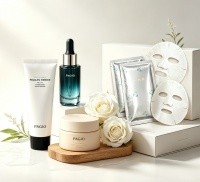
Panthenol is the backbone of our soothing formats — most directly the Vitamin B5 Soothing Mask, where it carries the comfort story alongside calming botanicals. Typical OEM/ODM options:
- Formats — masks, essences, serums, lotions, and creams.
- Custom dosing starting at 1%, adjusted so the finish stays light.
- Co-actives — centella, beta-glucan, hyaluronic acid, ceramides, squalane, and niacinamide.
- Positioning — unfragranced, reactive-skin-friendly, or positioned as after-acid care.
The full facial range shows where these soothing formats sit. To develop your own, send a brief to our OEM/ODM team; the R&D group will run texture trials and stability checks before production.
Is panthenol the same as vitamin B5?
Almost. Panthenol is the pro-vitamin form; skin converts it into pantothenic acid, which is vitamin B5. This is why it stays stable in a formula while still acting on skin.
Does panthenol work alongside retinoids?
It does, and it is one of the most common pairings. Many formulas use it precisely to make stronger actives feel more comfortable.
What percentage should I look for?
1–5% is the practical range. Higher percentages mostly add tackiness; a well-built formula rarely needs to push beyond that.
Is it suitable for oily skin?
Yes. It is light and water-based, and it does not add oil. If a product feels heavy, the base is usually the reason, not the panthenol.
Build Your Soothing Line with PROGEN
From panthenol masks to comfort-focused creams, PROGEN develops and manufactures soothing formulas under your brand.
Explore OEM/ODM SoothingGMP-certified manufacturing · Mask / Essence / Serum / Cream · 1%+ custom levels