



How to Repair a Damaged Skin Barrier: The Complete Guide for Sensitive, Irritated Skin in 2026
Quick Answer: How Do You Repair a Damaged Skin Barrier?
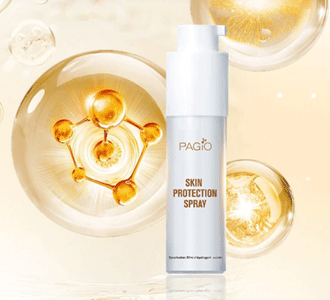
Repairing a damaged skin barrier comes down to simplifying your routine, restoring the lipid "mortar," and protecting against further damage. The skin barrier is a wall made of skin cells (the bricks) and lipids — ceramides, cholesterol, and fatty acids (the mortar). When over-exfoliation, harsh cleansers, or UV exposure strip those lipids, skin becomes tight, stinging, red, and reactive. The fix: pause all strong actives, use a gentle low-pH cleanser, replenish with a ceramide-rich moisturizer (the 3:1:1 ceramide-to-cholesterol-to-fatty-acid ratio works best), calm with botanicals like centella and snow lotus, and apply mineral sunscreen daily. Initial relief appears in 1-2 weeks, significant recovery in 4-8 weeks. PROGEN's Skin Protection Spray — built on Snow Lotus botanical technology with calming Schizophyllan, hydrating glycerol glucoside, and antioxidant carnosine — supports this repair process for instant, on-the-go soothing.
1. What Is the Skin Barrier — and Why It Matters
Your skin barrier is the outermost layer of your skin — the stratum corneum — and it is your body's first line of defense against the outside world. The most useful way to think about it is as a protective wall: skin cells are the bricks, and the lipids between them are the mortar holding everything together.
Those lipids — primarily ceramides, cholesterol, and free fatty acids — are the critical component. In fact, ceramides alone make up roughly 50% of the skin's lipid matrix. A healthy barrier does three essential jobs:
- Keeps moisture in — prevents the water in your skin from evaporating (a process scientists call transepidermal water loss, or TEWL).
- Keeps irritants out — blocks bacteria, pollutants, and allergens from penetrating.
- Maintains pH balance — keeps skin's natural acidity (around pH 4.5-5.5) stable.
When the mortar cracks, the wall fails on all three fronts at once. Skin loses water, becomes permeable to irritants, and — crucially — no amount of layering products will fix the problem until the barrier itself is rebuilt.
The Core Insight: A damaged barrier is the root cause behind most "sensitive skin" complaints. When your skin suddenly stings from products it tolerated for years, turns red after cleansing, or feels tight no matter how much moisturizer you apply — the barrier is the problem, not the products. Address the barrier first, and everything else improves.
2. Seven Signs Your Skin Barrier Is Damaged
How do you know if your barrier is compromised? Look for these telltale signs:
- Tightness after cleansing — skin feels dry and stretched immediately after washing, even with lukewarm water.
- Stinging or burning — products you've used for years suddenly cause a stinging sensation.
- Sudden reactivity — skin turns red or blotchy in response to mild environmental triggers.
- Persistent redness — a flushed appearance that does not fade.
- Flaky or rough texture — visible peeling and a sandpaper-like feel.
- Dryness that won't quit — skin feels dry no matter how much moisturizer you apply.
- Breakouts from familiar products — products that were previously fine now cause congestion.
It is worth distinguishing barrier damage from simple dryness: plain dryness usually improves with a richer moisturizer, while true barrier damage shows up as sensitivity to everything — a pervasive reactivity that does not respond to more product.
3. What Damages the Skin Barrier?
Most barrier damage is self-inflicted through well-intentioned but over-aggressive routines. The most common culprits:
- Over-exfoliation — daily or high-concentration AHAs (glycolic, lactic) and BHAs (salicylic acid) strip the lipid mortar faster than skin can rebuild it.
- Retinoids introduced too fast — retinol accelerates cell turnover, which increases water loss and disrupts the barrier during the adjustment phase.
- Harsh or foaming cleansers — sulfates and high-pH formulas strip natural lipids, leaving skin "squeaky clean" (a red flag, not a goal).
- Skipping moisturizer — without an occlusive layer, the barrier loses water continuously, especially in dry or air-conditioned environments.
- UV exposure — the single greatest external driver of barrier degradation; UV breaks down intercellular lipids and damages the proteins holding the barrier together.
- Too many actives at once — layering multiple strong ingredients compounds irritation and overwhelms skin's repair capacity.
4. The Barrier Repair Routine: Simple, Consistent, Effective
Repairing a damaged barrier is not about adding more products — it is about removing everything that interferes with skin's natural recovery. Here is the evidence-backed approach:
Step 1: Cleanse with Supreme Gentleness
Use a low-pH (4.5-5.5), fragrance-free, non-foaming cleanser — or skip the morning cleanse entirely and rinse with lukewarm water. Avoid anything that foams excessively or leaves skin feeling "squeaky clean," as this strips lipids. Pat dry gently; never rub.
Step 2: Replenish the "Holy Trinity" of Lipids
The single most important step is a ceramide-rich moisturizer that contains the full lipid trio: ceramides, cholesterol, and fatty acids. Research shows these three components work dramatically better together than ceramides alone — the optimal physiological ratio is approximately 3:1:1 (ceramide:cholesterol:fatty acid). Apply to slightly damp skin to lock in hydration.
Step 3: Calm with Targeted Botanicals
Add a calming layer to reduce redness and support recovery. The most evidence-backed botanicals include centella asiatica (cica), snow lotus, beta-glucan, and panthenol (pro-vitamin B5). These soothe reactive skin while supporting the barrier's repair mechanisms.
Step 4: Protect with Mineral Sunscreen
UV is the greatest external barrier-breaker, so daily protection is non-negotiable during recovery. A mineral sunscreen (zinc oxide or titanium dioxide) is gentler on compromised skin than chemical filters.
The timeline: Initial relief (less stinging, reduced tightness) usually appears within 2-3 days. Significant repair takes 2-4 weeks of consistent care, and severe damage can require 6 weeks or more — roughly one full 28-day skin renewal cycle.
5. Ingredients to Use — and to Avoid
| Category | Use These | Avoid These (Until Stable) |
|---|---|---|
| Barrier lipids | Ceramides (NP, AP, EOP), cholesterol, fatty acids | — |
| Humectants | Hyaluronic acid, glycerin, beta-glucan | Denatured alcohol |
| Calming actives | Centella asiatica, snow lotus, panthenol, allantoin | Fragrance, essential oils |
| Supportive | Niacinamide 2-5%, squalane, peptides | AHAs, BHAs, high-concentration vitamin C |
| Turnover boosters | — | Retinol and all retinoids |
A note on niacinamide: at 2-5% it supports ceramide synthesis and calms redness — but above 10% it can itself cause flushing, so keep concentrations modest during recovery.
6. The PROGEN Skin Protection Spray: On-the-Go Barrier Support
While a simplified routine rebuilds the barrier over weeks, there is a gap: what do you do in the moment, when skin flares up from a sudden trigger — sun exposure, seasonal shifts, a beauty service, or a long flight? This is where an on-the-go solution earns its place.
PROGEN's Skin Protection Spray is built on Snow Lotus Flower advanced botanical technology, formulated for instant soothing and comprehensive barrier support. Its composite formula is designed to achieve more than the sum of its parts:
- Schizophyllan — a calming cosmetic ingredient that supports skin's self-defense and conditions sun-exposed skin.
- Glycerol Glucoside — the core component of resurrection grass, which opens water channels to boost hydration, reduce roughness, and improve elasticity.
- Sodium Polyaspartate (SPA-25) — softens skin and improves elasticity while supporting barrier resilience.
- Carnosine — a free-radical scavenger that helps counter oxidative stress and supports a clearer complexion.
- Scutellaria Alpiniae (Baicalin) — absorbs UV and helps inhibit melanin production for a smoother, cleaner appearance.
The spray is designed for eight everyday moments: a spritz before makeup for a smooth base, instant soothing after sun exposure, comfort after a special beauty service, calming sensitive breakouts anytime, post-makeup refresh, all-night soothing before bed, and on-the-go care while traveling. It is the practical companion to a barrier-repair routine — addressing acute sensitivity while your simplified regimen rebuilds the foundation.
For a deeper look at PROGEN's biotech skincare approach, explore our Facial Skincare Series and Bio-Innovation R&D.
Frequently Asked Questions
How long does it take to repair a damaged skin barrier?
Initial relief — less stinging, reduced tightness — typically appears within 2-3 days of switching to a simplified, gentle routine. Significant repair takes 2-4 weeks of consistent care, and severe or chronic damage can require 6 weeks or more. The key is patience: resist the urge to reintroduce active ingredients before the barrier is fully stable.
Can I use retinol or acids while repairing my barrier?
No — pause retinoids, AHAs, and BHAs while the barrier is actively compromised. These ingredients accelerate cell turnover and increase water loss, which works directly against the repair process. Reintroduce them one at a time, at the lowest available concentration, only after 4-6 weeks of consistent calm.
Can oily skin have a damaged barrier?
Yes — and it is more common than most people realize. When the barrier is compromised, skin often overproduces oil to compensate for moisture loss, creating a frustrating combination of oiliness and sensitivity. The fix is the same: gentle cleansing, lipid replenishment, and calming support — not harsher oil-stripping products, which worsen the underlying problem.
What is the best product for instant relief from a sensitive flare-up?
For acute, in-the-moment soothing, a targeted calming spray like PROGEN's Skin Protection Spray is ideal — it delivers instant comfort without needing to wash or layer products. For long-term repair, pair it with a ceramide-rich moisturizer applied morning and night. The spray handles the moment; the moisturizer rebuilds the foundation.
Ready to Repair Your Skin Barrier?
Whether you are a brand sourcing barrier-supporting formulations or a skincare enthusiast rebuilding a compromised barrier, PROGEN's Skin Protection Spray and Facial Skincare Series deliver biotech-backed solutions built on 30-plus scientists and 50-plus patents. Explore our full OEM/ODM customization for your own brand line.
Contact PROGEN — Explore Skin Protection SolutionsWe will respond within 24 hours with product details and formulation guidance.