

How to Choose the Right Skincare OEM Factory in China: A Complete 2026 Guide for Global Brands
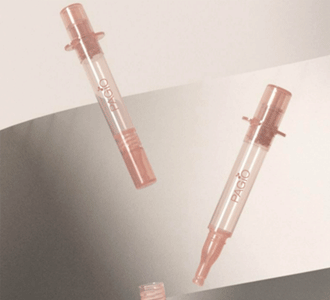
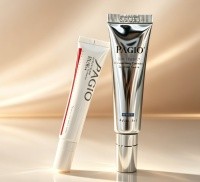
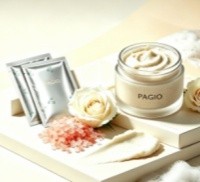
To choose the right skincare OEM factory in China, verify certifications (ISO 22716, GMPC, FDA), assess R&D capability (in-house chemists, formula library 1,000+), check MOQ flexibility (500-3,000 units for startups), audit quality control (HPLC/GC-MS equipment, stability testing), and evaluate export compliance. PROGEN offers GMP-certified OEM/ODM/OBM services covering product categories from facial skincare to body care and hair care. China has solidified its position as the world's leading hub for skincare OEM manufacturing. According to Business Research Insights, the global cosmetics OEM and ODM market is projected to reach USD 37.17 billion in 2026 and grow to USD 61.47 billion by 2035, with a CAGR of 5.6%. Asia Pacific alone accounted for USD 8.73 billion of the skincare contract manufacturing market in 2025. Three structural advantages give China its edge: Key Insight: When evaluating a skincare OEM factory in China, the key differentiators are no longer just price per unit. What separates world-class factories from the rest is their certification portfolio, R&D depth, quality control systems, and export compliance expertise. Certifications are the single most reliable indicator of a factory's quality standards. A trustworthy skincare OEM factory in China should hold at minimum: According to a 2025 NMPA quality report, over 60% of returned product registration applications cited incomplete safety assessment reports. PROGEN operates GMP-compliant R&D hubs with a 4,500m2 research center, 100,000-level GMPC workshop, and 50+ proprietary patents in China and the US. Industry research indicates that over 65% of new cosmetic startups depend on OEM partners for formulation development during their first three years. When assessing R&D capability, ask: Expert Tip: Request the factory's latest third-party audit report from SGS, TUV, or Intertek. Also ask for a formulation development log — genuine R&D factories maintain detailed records; formula brokers do not. MOQs are often the first hurdle for new brands. Chinese OEM factories have become increasingly flexible: PROGEN's 150,000+ pcs daily production capacity allows flexible scaling from small test runs to mass production, with 500-3,000 MOQ options for new brand partners. Common Pitfall: 34% of cross-border e-commerce sellers experienced supply chain disruptions during peak seasons due to manufacturer capacity constraints. Always verify production capacity against your forecasted volumes before selecting a skincare OEM factory in China. Quality control is where good factories separate from average ones. PROGEN applies rigorous QC across all product lines including the Facial Skincare Series (cleansing, anti-aging, lifting, hydrating) and the Hair Care Series (gentle cleansing, deep nourishment): Top factories are equipped with HPLC and GC-MS for active ingredient verification and contaminant detection. Different target markets have distinct regulatory frameworks: PROGEN serves clients globally with multi-market compliance expertise, ensuring products meet regulatory standards from the formulation stage. Our Facial Skincare Series and Eye Care Series are formulated for global compliance across US, EU, and Asian markets from day one. Certifications — specifically ISO 22716 (Cosmetic GMP) and the factory's NMPA-issued Cosmetics Production License. These are the baseline indicators of a legitimate, quality-compliant operation. White label products start at 500-1,000 units. ODM ranges from 1,000-3,000 units. Full custom OEM requires 3,000-10,000+ units depending on formulation complexity. Extremely important for Southeast Asia and Middle East markets. Indonesia mandates BPJPH Halal certification for all cosmetics from October 2026. Malaysia's JAKIM certification is recognized in 43 countries. Yes. Many Chinese OEM factories now offer flexible, low-MOQ programs designed for startups. Look for factories offering ODM (ready-formula) options that allow launching with minimal investment while maintaining branding flexibility. PROGEN brings together 30+ scientific experts, a 4,500m2 GMP R&D facility, 50+ proprietary patents, and 150,000+ pcs daily production capacity to deliver world-class OEM, ODM, and OBM solutions for global beauty and health brands. Whether you are launching your first skincare line or expanding into new markets across Southeast Asia, the Middle East, Africa, Europe, or the Americas — we have the expertise and capacity to bring your vision to life. We will respond within 24 hours with a customized OEM/ODM proposal for your brand. Sources: Business Research Insights (2026), PW Consulting (2026), NMPA Annual Quality Report (2025), Zhiyan Consulting (2026), Industry factory surveys. PROGEN - One-stop Bio-Innovation Solutions for Beauty and Health.Quick Answer: How to Choose a Skincare OEM Factory in China
In This Guide
1. Why China Dominates Skincare OEM Manufacturing
The Skincare OEM Process: From Concept to Delivery
2. Certifications: Your First and Most Important Filter
3. R&D Capability: Beyond the Product Catalog
4. Understanding MOQ: Finding Your Production Fit
5. Quality Control Systems
6. Export Experience and Global Compliance
7. 10-Step Factory Selection Checklist
Frequently Asked Questions
What should I check first when evaluating a skincare OEM factory in China?
What MOQ should I expect from a Chinese skincare OEM factory?
How important is Halal certification for skincare OEM?
Can a small brand with limited volume find a suitable skincare OEM factory in China?
Ready to Partner with a Trusted Skincare OEM Factory in China?