

How to Choose a Skincare Manufacturer for Your Brand: 10 Critical Factors You Must Consider
Quick Answer: How to Choose a Skincare Manufacturer
To choose the right skincare manufacturer for your brand, evaluate 10 critical factors: certifications (ISO 22716, GMPC), R&D capability (in-house chemists, formula library), MOQ flexibility (500-3,000 units), quality control systems (HPLC/GC-MS, stability testing), raw material transparency, export compliance, communication efficiency, sampling process, packaging support, and pricing transparency. Start with certifications — they are the non-negotiable baseline.
1. Certifications — Your Non-Negotiable Baseline
Certifications are the single most reliable indicator of a factory's quality standards. According to a 2025 NMPA quality report, over 60% of returned product registration applications cited incomplete safety assessment reports. When evaluating a skincare manufacturer, verify these core credentials first:
- ISO 22716 (Cosmetic GMP) — The international standard for cosmetics manufacturing, ensuring product safety and batch consistency. PROGEN's manufacturing facility operates at 100,000-level GMPC standards.
- GMPC (US FDA / EU Standards) — Required for any brand targeting American or European markets
- Cosmetics Production License — Issued by China's NMPA; operating without this is illegal
- Halal / Organic / Vegan Certifications — Depending on your target market, these additional certifications can be crucial differentiators
Expert Tip: Request the factory's latest third-party audit report from SGS, TUV, or Intertek. This is significantly more reliable than self-provided marketing materials. PROGEN holds certifications across ISO, GMPC, and has 50+ proprietary patents in both China and the US.
2. R&D Capability — Beyond the Product Catalog
A long product catalog does not equal innovation. Over 65% of new cosmetic startups depend on OEM partners for formulation development during their first three years. When assessing R&D, ask these specific questions:
- Do they have in-house cosmetic chemists? — Look for degreed chemists, not just formulation technicians. PROGEN's team of 30+ scientific experts spans biotechnology and bio-pharmaceutical research.
- What is their formula library size? — Top-tier factories maintain 1,000-10,000+ mature formulas. PROGEN holds 1,000+ ready formulations.
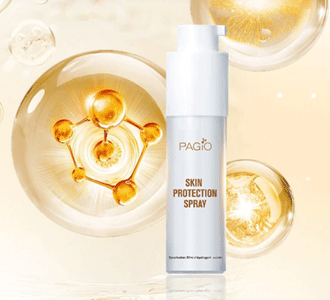
- Can they customize for different markets? — Formulations for tropical Southeast Asia differ from those for dry Middle Eastern climates. Our Skin Protection Spray and Body Care Series show climate-adaptable formulation expertise.
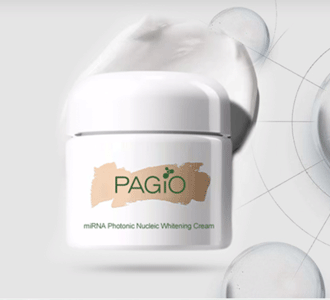
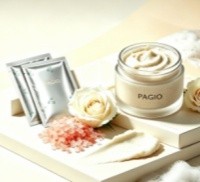
- Do they hold patents? — Patents are the strongest evidence of proprietary innovation. PROGEN's Photonic Nucleic Whitening Cream and Scalp Hair Growth Lyophilized Essence are backed by patented technologies.
3. MOQ Flexibility — Finding Your Production Fit
MOQ affects your upfront investment and inventory risk. The right manufacturer offers flexibility that matches your brand stage:
- Pilot batches: 100-300 units for market testing
- White label / OBM: 500-1,000 units for quick market entry
- ODM / Private label: 1,000-3,000 units for customized products
- Full custom OEM: 3,000-10,000+ units for proprietary formulations
PROGEN's 150,000+ pcs daily production capacity allows flexible scaling from small test runs to mass production, with 500-3,000 MOQ options for new brand partners. A transparent manufacturer will explain MOQ structure clearly and offer scaling pathways — avoid factories that make unrealistic low-volume promises without explaining cost implications.
4. Quality Control Systems — Consistency Is Everything
Quality control is where good factories separate from average ones. A robust QC system must include four critical checkpoints:
- Incoming raw material inspection — Certificate of Analysis (COA) and Material Safety Data Sheets (MSDS) for every ingredient batch
- In-process production monitoring — Real-time checks during emulsification, filling, and sealing
- Finished product testing — Microbiological tests, stability tests (accelerated aging at 40 C / 75% RH), and sensory evaluation
- Batch consistency verification — Cross-batch comparison ensuring every production run matches the approved sample
Top factories are equipped with HPLC and GC-MS for active ingredient verification and contaminant detection. PROGEN applies this rigorous QC across all product lines including the Facial Skincare Series and Hair Care Series.
Industry Warning: 34% of cross-border e-commerce sellers experienced supply chain disruptions during peak seasons due to manufacturer capacity or quality issues. Always verify production capacity and QC systems before selecting a manufacturer.
5. Raw Material Transparency — Your Brand's Foundation
Skincare quality starts with ingredient sourcing, not production. A reliable manufacturer should provide full documentation for all raw materials. Key questions to ask: Does the factory maintain close partnerships with verified global raw material suppliers? Can they provide Certificates of Analysis and traceability records for every ingredient? Are ingredients sourced from regions known for quality (such as PROGEN's bioactive ingredient development pipeline)?
6. Export Compliance — Global Market Readiness
If you are targeting international markets, your manufacturer must already understand how to comply. Different regions require different documentation: US (FDA registration, MoCRA compliance), EU (Regulation EC No 1223/2009, CPNP notification, Safety Assessment Report), Indonesia (BPOM, mandatory Halal from October 2026), Malaysia (NPRA, JAKIM Halal), and Saudi Arabia (SFDA, Halal). A factory with proven export experience has already navigated these regulatory pathways, saving you months of compliance work.
7. Communication and Professionalism
Efficient communication can save you months of time. During initial contact, evaluate: Does the factory reply within 24 hours with clear, organized information? Does the sales representative understand cosmetic chemistry and export processes, or are they just a messenger? Does the factory offer professional advice — pointing out unreasonable formulation requests and suggesting better alternatives? A factory that blindly says "yes" to everything should raise red flags.
8. The Sampling Process — The Ultimate Test
Sampling is the ultimate validation of a factory's true capabilities. Never sign a contract without receiving and testing samples first. A proper sampling process includes: benchmark testing (provide a reference product for replication or upgrading), sensory adjustment rounds (texture, absorption, fragrance refinement over 1-3 iterations), stability and compatibility testing (high/low temperature cycles to detect separation or discoloration), and sample sign-off (sealed samples in triplicate as the legal quality standard for mass production).
9. Packaging and Branding Support
Packaging directly affects your product's market perception and shelf stability. A capable manufacturer should offer: multiple packaging sourcing options, custom mold development for premium brands, compliance labeling per target market regulations, and eco-friendly or sustainable packaging alternatives. PROGEN provides end-to-end packaging support across all manufacturing tracks — from ready-to-brand OBM to fully custom OEM packaging design.
10. Pricing Transparency — No Hidden Costs
A professional manufacturer provides an itemized quotation covering every cost component: formula development fee, raw material cost per unit, packaging cost per unit, filling and assembly labor, quality testing fees, certification and compliance documentation, and shipping and logistics. Request a detailed BOM (Bill of Materials) quote before committing. Confirm whether sampling fees are refundable against bulk orders, and whether mold fees, packaging wastage, or registration fees are included in the quoted price.
Frequently Asked Questions
What is the most important factor when choosing a skincare manufacturer?
Certifications — specifically ISO 22716 and the factory's NMPA-issued Cosmetics Production License. Without these, the manufacturer cannot legally produce or export skincare products. They are the non-negotiable baseline before considering any other factor.
How long does it take to go from concept to finished product?
Private label (ODM) typically takes 4-8 weeks from brief to delivery. Full custom OEM takes 12-16+ weeks including formulation, multiple sample rounds, stability testing (2-4 weeks minimum), and bulk production. Start the process at least 3-4 months before your planned launch date.
Can I protect my formula when working with a Chinese OEM factory?
Yes. Always sign an NNN Agreement (Non-Disclosure, Non-Use, Non-Circumvention) — this is legally stronger in China than a standard NDA. Sealed samples in triplicate serve as the legal standard for mass production, and patent protection is available for truly novel formulations.
How do I know if the manufacturer is actually capable?
Request a third-party audit report (SGS, TUV, Intertek), ask for 2-3 client case studies from your target market, conduct either an on-site visit or a live video walkthrough of the production floor, and always order and test samples before committing to a production run.
Ready to Find Your Ideal Skincare Manufacturing Partner?
PROGEN brings together 30+ scientific experts, a 4,500m2 GMP R&D facility, 50+ proprietary patents, and 150,000+ pcs daily production capacity. Whether you need flexible OBM for a quick market test, customized ODM for your private label, or full OEM for your proprietary formulas — from our premium skincare lines to advanced bioactive formulations — we have the expertise to bring your vision to market.
Contact PROGEN — Start Your Free ConsultationWe will respond within 24 hours with a detailed assessment of your project requirements.
Sources: Business Research Insights (2026), NMPA Annual Quality Report (2025), Industry OEM/ODM factory surveys (2025-2026), PW Consulting (2026). PROGEN — One-stop Bio-Innovation Solutions for Beauty and Health.