
How Much Does It Cost to Manufacture a Skincare Product? A Complete Pricing Breakdown for 2026
Quick Answer: How Much Does It Cost to Manufacture a Skincare Product?
Most skincare products cost between $1.50 and $15.00 per unit to manufacture in 2026, depending on product type, formulation complexity, packaging, and order quantity. A basic moisturizer at 3,000 units runs $1.20-3.00/unit; a mid-range anti-aging serum at 5,000 units runs $5.00-8.00/unit. Total launch costs for a 3-product line (1,000 units each) typically range from $8,000-$25,000 including packaging, testing, and compliance. The largest cost drivers are active ingredients (20-30%), primary packaging (15-25%), and MOQ tier.
1. The Complete Cost Structure of Skincare Manufacturing
Understanding how much it costs to manufacture a skincare product requires looking at six distinct cost blocks. Manufacturers' quotes are built from these components — and understanding each one helps you spot areas to optimize without sacrificing quality:
| Cost Component | Share of Total | Basic Product | Mid-Range | Premium |
|---|---|---|---|---|
| Raw Materials & Ingredients | 20-30% | $0.80-1.80 | $1.50-3.50 | $3.00-8.00 |
| Primary Packaging | 15-25% | $0.50-1.00 | $0.80-2.00 | $1.50-5.00 |
| Production & Labor | 15-20% | $0.80-2.00 | $1.00-3.00 | $2.00-5.00 |
| QC Testing & Compliance | 5-10% | $0.30-0.80 | $0.50-1.50 | $1.00-3.00 |
| Secondary Packaging | 3-8% | $0.20-0.50 | $0.40-0.80 | $0.60-2.00 |
2. Per-Unit Cost by Product Category
The product type is the single largest factor determining your manufacturing cost. Here are real-world price ranges from Chinese OEM factories at 3,000-unit batches:
| Product Type | Typical Size | 500-1,000 Units | 3,000-5,000 Units | 10,000+ Units |
|---|---|---|---|---|
| Face Cream / Moisturizer | 50ml | $2.00-4.50 | $1.50-3.50 | $1.20-3.00 |
| Serum (Anti-aging / Vitamin C) | 30ml | $2.50-6.00 | $2.00-5.50 | $1.50-4.50 |
| Eye Cream | 15ml | $2.00-5.00 | $1.50-4.00 | $1.20-3.50 |
| Cleanser / Face Wash | 100ml | $1.00-2.50 | $0.80-2.00 | $0.60-1.50 |
| Toner | 150ml | $1.00-2.50 | $0.80-2.00 | $0.60-1.50 |
| Sheet Mask | Per piece | $0.25-0.55 | $0.18-0.40 | $0.12-0.35 |
| Body Lotion | 250ml | $1.00-2.50 | $0.80-2.00 | $0.60-1.50 |
Source: 2026 China OEM factory price surveys, 8 OEM/Opseve/Deva SkinTek industry benchmarks.
Scale Economics: Doubling your order quantity typically reduces per-unit cost by 15-30%. A serum costing $5.50/unit at 1,000 pieces drops to $4.00 at 5,000 pieces and $2.80 at 10,000+ pieces. This is why launching with a higher MOQ is often cheaper in the long run despite the larger upfront investment.
3. Ingredient Cost: The Largest Variable
Active ingredients create the largest cost variance between seemingly similar products. Two serums both labeled "hyaluronic acid" can have dramatically different manufacturing costs:
- Basic hyaluronic acid (standard grade): $30-70/kg — suitable for budget moisturizers
- Multi-molecular-weight HA complex: $150-400/kg — standard for mid-range serums
- Medical-grade / fermentation-derived HA: $500-3,000/kg — premium anti-aging formulations
- Peptides (e.g., Matrixyl, Argireline): $1,500-5,000/kg — high-efficacy anti-aging
- Retinol / Vitamin C (stabilized form): $200-800/kg — requires specialized stabilization
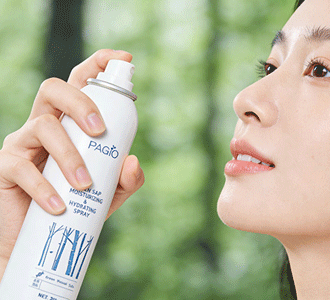
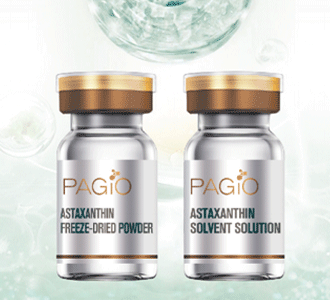
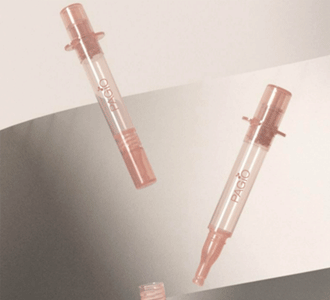
PROGEN's Astaxanthin Freeze-Dried Powder represents the premium end — using bioactive freeze-drying technology that preserves ingredient potency — while our Birch Sap Series demonstrates how natural botanical actives can deliver efficacy at mid-range cost. The right manufacturer helps you select ingredients that match both your efficacy goals and your budget.
4. Packaging: Often Costs More Than the Formula
Many brand founders are surprised to learn that packaging can exceed the cost of the product inside the bottle. In 2026, packaging cost ranges by type:
- Standard PP jar (50ml, with inner cap): $0.30-0.60/unit — most cost-effective option
- Glass jar (50ml): $0.60-1.20/unit — heavier, premium feel, higher shipping cost
- Airless pump bottle (30ml): $0.80-2.00/unit — protects active ingredients from oxidation
- Custom mold development: $2,000-8,000 one-time fee — for fully unique bottle shapes
- Color carton with foil stamping: $0.30-0.80/unit — elevates perceived value significantly
Cost-Saving Strategy: Launch with standard OEM containers (no custom mold fees), then invest in custom packaging for your hero SKU once it proves its sales velocity. This can reduce your initial investment by $2,000-8,000 per product.
5. Hidden Costs That Surprise First-Time Brand Founders
Beyond the per-unit price, several costs catch first-time brands off guard. Budget for these from day one:
- Formula development fee: $500-$3,000 per formula (waived by some manufacturers at volume). PROGEN offers ODM services where this is included
- Stability and compatibility testing: $300-$800 per SKU for 3-month accelerated aging tests
- Microbiological and heavy metal testing: $200-$500 per batch
- Product registration and filing: $300-$1,500 per SKU depending on the target market (FDA, EU CPNP, BPOM, etc.)
- Sample and shipping fees: $100-$400 for international courier delivery of pre-production samples
- Mold fees for custom packaging: $2,000-$8,000 one-time, per unique component
- Pre-shipment inspection: $300-$600 through agencies like SGS, V-Trust, or HQTS
6. Total Launch Budget: Real-World Scenarios
Here is what a complete launch budget looks like at three different brand stages:
| Brand Stage | Products | Units Each | Per Unit | Total Budget |
|---|---|---|---|---|
| Startup / Test Launch | 1 product (serum 30ml) | 1,000 | $5.50 | $5,500 - $8,000 |
| Growing Brand | 3 products | 3,000 each | $3.50 avg | $31,500 - $45,000 |
| Established Line | 5+ products | 5,000+ each | $2.50 avg | $62,500 - $100,000+ |
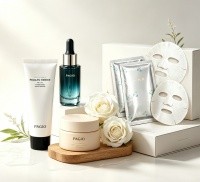
The total includes manufacturing, packaging, testing, compliance, mold fees (if applicable), sample rounds, and basic shipping. Marketing, branding, photography, and FBA fees are additional. PROGEN's Facial Skincare Series and Eye Care Series are designed for cost-efficient ODM launches across all three brand stages.
7. How to Reduce Costs Without Sacrificing Quality
- Start with standard packaging — avoid custom molds until your brand proves market demand. This alone saves $2,000-8,000 per product
- Use private label (ODM) formulas first — full custom OEM development costs 2-3x more than adapting an existing formula from the manufacturer's library. PROGEN's 1,000+ ready formulations provide ample choice
- Bundle products for shared production runs — manufacturing 3 products in one batch reduces per-unit costs through shared setup time
- Increase MOQ strategically — moving from 1,000 to 5,000 units typically reduces per-unit cost by 30-50%. The trade-off is higher inventory investment
- Choose suppliers with integrated supply chains — factories that control raw material sourcing, packaging supply, and production under one roof, like PROGEN, eliminate middleman markups at every stage
- Plan seasonal production — avoiding peak production seasons (Chinese New Year, Golden Week) can reduce rush fees and delays
Frequently Asked Questions
How much does it cost to manufacture a skincare product as a startup?
For a single product at 1,000 units, expect to pay $4.00-6.00 per unit for a mid-range serum or cream, with a total launch budget of $5,500-8,000 including testing, packaging, and compliance. Simple products like cleansers or toners can start as low as $1.00-2.50/unit.
What is the biggest cost driver in skincare manufacturing?
Active ingredients (20-30% of total cost) and primary packaging (15-25%). A serum labeled "hyaluronic acid" can cost anywhere from $0.50 to $15.00/unit depending on the grade and concentration of the HA used. Packaging choices like airless pumps or glass bottles can more than double packaging costs compared to standard PP containers.
How much does MOQ affect per-unit cost?
Significantly. Moving from 1,000 to 5,000 units typically reduces per-unit cost by 30-50%, and from 5,000 to 10,000+ by another 15-25%. A factory charging $5.50/unit at 1,000 pieces might charge $3.50 at 5,000 and $2.60 at 10,000.
Are organic or natural certifications more expensive?
Yes. Organic-certified raw materials typically cost 20-50% more than conventional alternatives. Halal certification adds an additional compliance layer. These certifications are worth the investment if your target market values them — particularly in Southeast Asia, Middle East, and EU markets.
Get a Transparent Quote for Your Skincare Product
PROGEN provides itemized quotations covering every cost component: raw materials, packaging, production, testing, and compliance. With 1,000+ ready formulations, flexible MOQ from 500-3,000 units, and a fully integrated 4,500m2 GMP facility — from our advanced actives to complete product lines — we help you build a brand at the right cost.
Contact PROGEN — Request a Detailed QuoteWe will respond within 24 hours with a transparent, itemized proposal.
Sources: 2026 China OEM factory price surveys, 8OEM/Opseve/Deva SkinTek/ProYanova industry benchmarks, SEYE Cosmetic Manufacturing Data (2026), NMPA regulatory filing costs (2025-2026). PROGEN — One-stop Bio-Innovation Solutions for Beauty and Health.