








Growth Factors in Skincare: The Next-Gen Anti-Aging Actives Behind Cellular Renewal
Quick Answer: What Are Growth Factors in Skincare?
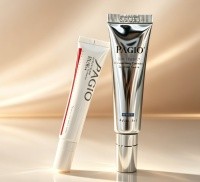
Growth factors are signaling proteins that your body naturally produces to tell skin cells how to behave — when to build collagen, repair tissue, and renew themselves. Their levels decline with age, which is one reason skin loses firmness and resilience over time. In skincare, replenishing growth factors (such as fibronectin) supports cellular renewal, collagen production, and a firmer, more elastic complexion — making them 2026's "next-gen anti-aging" actives, favored for their gentleness compared to harsher retinoids. PROGEN's Facial Skincare Series harnesses fibronectin alongside collagen and peptides to build a deep, skin-supporting network.
1. What Are Growth Factors?
Growth factors are proteins that act as chemical messengers — they carry instructions that tell your skin cells what to do. In healthy, youthful skin, these messengers flow freely, signaling cells to produce collagen and elastin, repair damage, and renew themselves on schedule. This is the body's built-in maintenance system, and it runs silently in the background every day.
The catch: growth factor levels decline with age. As the body produces fewer of these signaling proteins, the messages slow down — collagen production drops, cell renewal becomes sluggish, and the visible signs of aging (fine lines, sagging, dullness) begin to accumulate. This is not a sudden failure but a gradual, cumulative slowdown in the skin's internal communication network.
The insight behind growth-factor skincare is elegant in its simplicity: if aging is partly a decline in cellular signaling, then replenishing those signals can help restore youthful cell behavior. Instead of forcing the skin's surface to change, growth factors speak the skin's own language, encouraging it to renew from within.
The Signaling Advantage: Traditional anti-aging actives often work by "pushing" the skin — exfoliating the surface or chemically stimulating turnover, which can irritate. Growth factors work differently: they "communicate" with skin cells, supporting the natural processes that already exist. This is why the category is prized for its gentleness as much as its effectiveness.
2. Why Growth Factors Are "Next-Gen" Anti-Aging
For years, the anti-aging conversation was dominated by two actives: retinoids (which accelerate turnover but often cause dryness and irritation) and vitamin C (which brightens and supports collagen but can be unstable). Both work, but both have trade-offs.
Growth factors represent a third generation — one that works at the cellular level through the skin's own signaling pathways. The shift is visible in the market: premium brands are now launching growth-factor moisturizers and serums positioned as "cellular-level anti-aging," and the ingredient category is being called the next frontier after peptides.
- Communicates, not forces — growth factors support the skin's natural renewal rather than overriding it.
- Gentle by design — signaling proteins are well-tolerated, even by sensitive skin that cannot handle retinoids.
- Targets the root cause — addresses the decline in cellular signaling that underlies aging, rather than just its surface signs.
3. Fibronectin: The Star Growth Factor in PROGEN's Formula
Among growth factors, fibronectin is one of the most important for skin structure. It is a glycoprotein that naturally resides in the skin's extracellular matrix — the supportive scaffold between cells — where it plays a dual role:
- Structural support — fibronectin helps anchor cells to the surrounding matrix, contributing to skin's firmness and resilience.
- Renewal signaling — it guides cell behavior during tissue repair and regeneration, supporting the skin's natural rebuilding processes.
This dual function — structure plus signaling — is what makes fibronectin such a valuable anti-aging active. It supports the skin's scaffolding while simultaneously encouraging cells to maintain and renew it.
In the scalp, PROGEN harnesses fibronectin as the core of its Scalp Barrier Care System, where it nourishes the scalp base and strengthens hair roots.
4. How PROGEN Combines Growth Factors for Deep Anti-Aging
Growth factors rarely work alone — they perform best when paired with the very building blocks they help produce. PROGEN's Facial Skincare Series reflects this principle in its Rejuvenating Time-Freezing Serum, which blends fibronectin with a rich collagen network:
- Fibronectin — the growth-factor signal that supports cellular renewal and structural anchoring.
- Collagen complex — deer bone collagen, hydrolyzed codfish skin protein, silk sericin, and soluble collagen work together to replenish the skin's supportive matrix. Large molecules fill fine lines while smaller molecules penetrate deeper to lift and smooth.
- Antioxidant reinforcement — bifida ferment lysate, glutathione, and 3-O-ethyl ascorbic acid fight free radicals, reduce glycation and dullness, and protect the newly supported structure.
The result is a layered approach: fibronectin signals renewal, collagen replenishes structure, and antioxidants protect it — a comprehensive, gentle path to firmer, more resilient-looking skin. Explore the full range at our Bio-Innovation R&D center, backed by 30-plus scientists and 50-plus patents.
5. How to Incorporate Growth Factors into Your Routine
- Be consistent — growth factors work through gradual cellular support. Daily use over 8-12 weeks produces the most visible firming and smoothing results.
- Apply after cleansing, before moisturizer — a growth-factor serum delivers the highest concentration. Follow with a moisturizer to seal in the actives.
- Pair with sunscreen — protect the collagen and structure your routine is building. UV exposure is the fastest way to undo anti-aging progress.
- Gentle enough to layer — growth factors pair well with hydrating actives like hyaluronic acid and niacinamide. If you also use retinoids or acids, separate them into different parts of your routine.
Frequently Asked Questions
What is the difference between growth factors and peptides?
Both are cell-signaling ingredients, but they work at different scales. Peptides are short chains of amino acids that send specific, targeted signals — like "produce more collagen." Growth factors are larger signaling proteins that regulate broader cellular behaviors, including renewal, repair, and structural support. In practice, they are complementary: many advanced formulas combine both, using peptides for targeted stimulation and growth factors for overall cellular support.
Are growth factors safe for sensitive skin?
Yes — gentleness is one of the category's defining strengths. Because growth factors communicate with skin cells rather than exfoliating or chemically forcing change, they are well-tolerated by most skin types, including sensitive skin that cannot handle retinoids. This makes them an attractive anti-aging option for people who want results without irritation.
How long do growth factors take to show results?
Growth factors work gradually through sustained cellular support. Most users notice improved hydration and a smoother feel within 2-4 weeks. Visible firming and fine-line improvement typically emerge over 8-12 weeks of consistent daily use. The payoff of this gradual approach is that results tend to be stable and long-lasting rather than a temporary surface effect.
Can growth factors replace retinol?
Growth factors and retinol work through different mechanisms and are often complementary rather than interchangeable. Retinol accelerates cell turnover and is a proven wrinkle reducer, but it can cause dryness and irritation. Growth factors support cellular renewal more gently. Many users pair them — retinol in the evening for turnover, growth factors in the morning for renewal support — or choose growth factors if their skin cannot tolerate retinoids.
Ready to Experience Cellular-Level Anti-Aging?
Whether you are a skincare enthusiast seeking gentle, next-gen anti-aging or a brand sourcing biotech formulations, PROGEN's Facial Skincare Series delivers growth-factor-powered renewal backed by 30-plus scientists and 50-plus patents. Explore our OEM/ODM customization for your own brand.
Contact PROGEN — Explore Biotech Anti-Aging SolutionsWe will respond within 24 hours with product details and formulation guidance.