

Everything You Need to Know About Skincare Contract Manufacturing Services: From Formulation to Shelf
Quick Answer: What Are Skincare Contract Manufacturing Services?
Skincare contract manufacturing services allow brands to outsource product development and production to specialized manufacturers. The three main models are OEM (you provide the formula, the factory produces it), ODM (the factory provides ready formulas you can brand and customize), and OBM (full turnkey brand creation from concept to shelf). The global skincare contract manufacturing market reached $21.5 billion in 2025 and is projected to hit $32.6 billion by 2032, growing at 6.1% CAGR. A typical project takes 45-90 days from brief to delivery.
1. What Are Skincare Contract Manufacturing Services?
Skincare contract manufacturing is the process where a brand outsources some or all of its product development and production to a specialized third-party manufacturer. Rather than building your own factory, hiring a team of cosmetic chemists, and navigating regulatory compliance alone, you partner with a manufacturer who already has the facilities, expertise, and certifications in place.
According to PW Consulting, the global skincare contract manufacturing market reached $21.5 billion in 2025 and is projected to grow to $32.6 billion by 2032 at a 6.1% CAGR. Over 70% of emerging beauty brands now rely on contract manufacturing partners — it has become the default path to market, not the exception.
2. OEM vs ODM vs OBM: Understanding the Three Models
Contract manufacturing is not one-size-fits-all. Understanding the three primary models helps you choose the right level of involvement and investment:
| Feature | OEM (Original Equipment) | ODM (Original Design) | OBM (Original Brand) |
|---|---|---|---|
| Who designs the formula? | You (the brand) | Factory provides ready formulas | Factory provides turnkey products |
| Customization level | Full — your proprietary formula | Partial — tweak existing formulas | Minimal — ready-to-brand |
| Time to market | 60-120 days | 30-60 days | 14-30 days |
| Upfront investment | Highest ($5,000-20,000/development) | Moderate ($1,000-5,000) | Lowest ($500-2,000) |
| MOQ typical | 3,000-10,000+ units | 1,000-3,000 units | 500-1,000 units |
| Best for | Established brands with proprietary IP | Growing brands seeking differentiation | Startups testing the market |
Strategic Advice: Many successful brands start with OBM for rapid market entry, transition to ODM as they build brand identity, and eventually move to OEM when they are ready to develop proprietary formulas. PROGEN supports all three tracks under one roof, allowing you to evolve without changing manufacturers.
3. The Full Contract Manufacturing Process: 8 Stages from Concept to Shelf
Every skincare product manufactured through contract services follows a structured process. Here is what to expect at each stage:
| Stage | Timeline | What Happens |
|---|---|---|
| 1. Brief and Consultation | Week 1 | Define product type, target market, efficacy requirements, budget, and packaging preferences. PROGEN's project managers align your vision with our R&D capabilities. |
| 2. Formulation Development | Weeks 2-4 | Chemists develop and iterate lab samples. For ODM, selecting from 1,000+ ready formulas. For OEM, custom development with your specifications. |
| 3. Sampling and Testing | Weeks 4-6 | You receive samples for texture, fragrance, and skin-feel evaluation. Typically 2-3 revision rounds to perfection. |
| 4. Stability and Safety Testing | Weeks 6-8 | Accelerated aging tests (40 C/75% RH), microbiological testing, heavy metal analysis, and compatibility testing with packaging. |
| 5. Packaging Design and Sourcing | Weeks 6-10 | Bottle, jar, tube, or airless pump selection. Label and carton design. FNSKU labeling for Amazon sellers if needed. |
| 6. Regulatory Compliance | Weeks 8-10 | Product registration per target market: FDA (US), EU CPNP, BPOM (Indonesia), NAFDAC (Nigeria), SFDA (Saudi Arabia). |
| 7. Bulk Production | Weeks 10-12 | Mass production on GMP-certified lines at PROGEN's 100,000-level GMPC facility. 150,000+ pcs daily capacity. |
| 8. QC, Packaging, and Delivery | Weeks 12-14 | Final quality checks, batch coding, packaging assembly, and global shipping coordination. |
4. The Service Scope: What a Full-Service Manufacturer Should Handle
A comprehensive contract manufacturing partner should provide services far beyond mixing and filling. Here is the full scope a capable manufacturer should cover:
- Market insight and trend analysis — Understanding what sells in your target market before investing in development
- Formula R&D — Either developing custom formulas or providing access to a library of proven, market-tested formulations
- Raw material sourcing — Verified supply chains with Certificates of Analysis and traceability for every ingredient
- Packaging procurement — Bottles, jars, pumps, labels, cartons — sourced, tested for compatibility, and delivered
- Stability and safety testing — Accelerated aging, microbial testing, preservative challenge testing
- Regulatory support — Product registration, safety assessment reports, INCI documentation for global markets
- Production and filling — GMP-certified manufacturing with batch-to-batch consistency
- Quality control — Multi-stage QC including HPLC/GC-MS equipment for active ingredient verification
- Logistics and shipping — FBA-ready packaging, global freight coordination
5. Why Brands Outsource Manufacturing
The economic logic of contract manufacturing is compelling. Building a GMP-certified skincare factory requires an investment of $2-10 million in facilities, equipment, and certifications — plus the ongoing cost of staffing a team of cosmetic chemists, QC engineers, and production workers. Contract manufacturing converts this fixed cost into a variable cost, allowing brands to:
- Reduce time to market by 60-80% — Skip facility construction and go directly to production
- Access specialized expertise — PROGEN's 30+ scientists bring decades of combined R&D experience
- Scale production on demand — From 500-unit test runs to 150,000+ daily production
- Meet global compliance — GMPC, ISO 22716, FDA registration handled by the manufacturer
- Focus on branding and sales — Your team does what it does best while the factory handles production
6. PROGEN's Full-Spectrum Contract Manufacturing
PROGEN offers integrated contract manufacturing services across three tracks, supporting brands from concept to global distribution:
OBM — Fast Market Entry: Our standardized packaging series enables low MOQ, fast delivery, and guaranteed quality across product lines from Facial Skincare to Body Care and Hair Care. Ideal for brands wanting rapid market entry without development complexity.
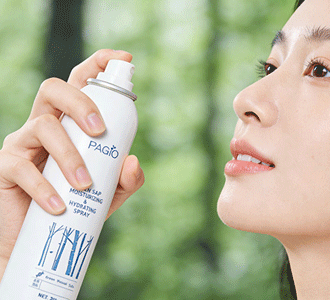
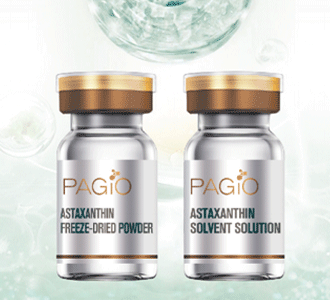
ODM — Differentiated Brand Building: For partners who want unique products, PROGEN provides personalized formula development from our 1,000+ ready formulations, customized packaging, and full brand creation services. Products like our Astaxanthin Freeze-Dried Powder and Birch Sap Series represent the quality achievable through ODM partnerships.
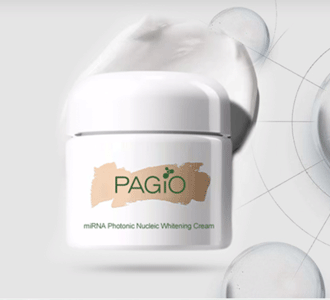
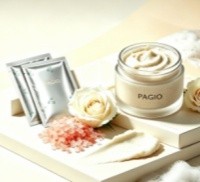
OEM — Proprietary Formula Production: For brands with their own formulations, PROGEN provides GMP manufacturing, QC, and packaging. Our patented technologies — including the Photonic Nucleic Whitening Cream and Scalp Hair Growth Lyophilized Essence — demonstrate the level of scientific rigor we bring to every project.
Frequently Asked Questions
What is the difference between OEM and ODM in skincare contract manufacturing?
OEM means you provide the formula and the factory produces it — you own the IP and drive development. ODM means the factory provides ready formulas from its library — you select, brand, and sell. ODM is faster (30-60 days) and cheaper to start; OEM provides full exclusivity but takes longer (60-120 days).
How long does the full contract manufacturing process take?
A typical ODM project takes 45-60 days from brief to delivery. Full custom OEM takes 60-120 days. The major time drivers are formulation development (2-4 weeks), stability testing (2-4 weeks), and regulatory filing (varies by market).
Can I switch from OBM to ODM or OEM later?
Yes — and this is a common growth path. Many brands start with OBM (turnkey products) to validate market demand, then transition to ODM for differentiation, and eventually move to OEM when they want proprietary formulas. PROGEN supports all three tracks, so you never need to change manufacturers as you grow.
Ready to Bring Your Skincare Brand to Life?
PROGEN's contract manufacturing services cover every stage — from concept development to shelf-ready delivery. With 30+ scientists, a 4,500m2 GMP R&D facility, 50+ proprietary patents, and 150,000+ pcs daily production capacity, we provide the infrastructure, expertise, and scale your brand needs. From specialized formulations to complete product lines, we manufacture across every skincare category.
Contact PROGEN — Start Your Manufacturing ProjectWe will respond within 24 hours with a detailed project proposal.
Sources: PW Consulting Skincare Contract Manufacturing Report (2026), Business Research Insights (2026), Industry factory process surveys (2025-2026). PROGEN — One-stop Bio-Innovation Solutions for Beauty and Health.